Squalane After Dermaplaning
You have just taken a blade across your face. The product that goes on next should be the least interesting thing in your bathroom — and this is the one page on this site where buying the small bottle is the right answer.
We may earn a commission if you buy through our links, at no extra cost to you. Prices are pulled live from Amazon and can change. How this works.
Dermaplaning works by exfoliating. That is the point of it and it is also the reason the step afterward matters more than usual: Cleveland Clinic's own guidance on at-home dermaplaning describes it as lightly disrupting the skin barrier, the outer layer that keeps skin protected and hydrated, and says skin may feel a little irritated for a day or so afterward. The advice that follows from that, in the same guidance, is short — moisturize well and keep wearing sunscreen.
Quick answer. A single-ingredient squalane oil is close to an ideal post-dermaplaning product, for a boring reason: there is nothing in it to sting. Apply two or three drops to slightly damp skin once the blade is away and your face is clean, then sunscreen if it is daytime. Skip anything with fragrance, essential oils, retinoids, acids or vitamin C for the rest of that day. If you are buying an oil specifically for this, buy a small bottle — a weekly pass uses a few drops, and this is the one use case on this site where the big-value bottle is the wrong purchase.
Two different things are called dermaplaning
This trips up a lot of aftercare advice, including advice that gets written as though the two were interchangeable. They are not remotely.
At-home dermaplaning is the one most people mean. Cleveland Clinic dermatologist Dr. Melissa Piliang describes the tools as "single blades on a little plastic handle" sold in drugstores — a facial razor. It takes off peach fuzz and the outermost dead cells, it lightly disrupts the barrier, skin may be slightly irritated for a day, and the guidance is to go slowly to avoid nicks, clean the razor before and after, and do it no more than once a week.
In-office dermaplaning is a minimally invasive cosmetic procedure performed with a dermatome, a tool with a small moving blade, by a doctor or aesthetician. Cleveland Clinic's clinical page on it describes a genuinely different recovery: skin is typically red, swollen and tender, redness and swelling should subside within about a week, a scab may form at around two weeks, and sun avoidance continues until skin returns to its normal color, which it says can take six to twelve months. A provider may apply a soothing gel or ointment themselves.
If you had the in-office procedure, follow your provider's aftercare instructions and ask them before adding anything, including squalane. Cleveland Clinic's advice is explicitly to ask your provider which products to use or avoid. Everything below is written for the at-home facial-razor version.
Why squalane specifically, and what it does not do
Squalane is an emollient. It sits on the surface and slows the rate at which water leaves the skin; it does not pull water in and it is not a treatment for anything. On freshly exfoliated skin that is exactly the job description — you want to reduce transepidermal water loss through a barrier that has just been thinned slightly, and you want to do it with the smallest possible number of ingredients.
Three properties make it unusually well suited to the day you dermaplane. It is a single ingredient when you buy it pure, so there is no fragrance, no preservative system and no active to react with a compromised surface. It is a lipid your own skin already makes — squalane is the hydrogenated, shelf-stable form of squalene, which is a component of human sebum, which is why it feels native rather than occlusive. And it is rated 0 to 1 for comedogenicity, which matters because dermaplaning can make pores look temporarily more prominent and the last thing you want is a heavy cream on top of that. The underlying mechanism is covered properly in does squalane help the skin barrier? and squalane benefits.
What we are not going to claim: that squalane heals skin faster, speeds barrier recovery, or reduces post-dermaplaning redness. There is no evidence we can point to for any of those, and the honest version is narrower and still worth acting on — it is a well-tolerated moisturizing step with almost nothing in it, which is what the aftercare guidance asks for.
Before, during, after: where the oil actually goes
- Before: cleanse, and leave the skin dry. A clean, dry surface is what a facial razor is designed to work on and what every at-home guide assumes.
- During: we are not going to tell you to use squalane as a glide, because we cannot find authoritative guidance either way on using a slip product during the pass. What the guidance does say is to go slowly, use a tool with a guard, and keep the blade clean. Our scope on this page is the after.
- Immediately after: rinse or wipe off the loosened debris and pat the skin until it is damp rather than wet. Two or three drops of squalane, warmed between the fingertips, pressed rather than rubbed. Damp skin is not a detail - squalane has no humectant action, so it can only hold onto water that is already there, which is the whole argument in squalane on damp skin.
- Then sunscreen, if it is daytime. Freshly exfoliated skin and sun are a bad combination and sunscreen is the one non-negotiable in every piece of dermaplaning guidance we read. The oil goes under it - see squalane before or after sunscreen.
- That evening: squalane again on damp skin if your skin feels tight. Nothing else new.
- The next day: back to normal, including whatever actives you normally use, unless skin still feels irritated.
The criterion: ingredient count, not bottle size
This site ranks squalane oils on cost per ounce most of the time, and on one page specifically it ranks them on volume, because a gua sha session needs enough slip to keep a stone moving over a whole face and that burns through oil fast. This page inverts that deliberately.
A dermaplaning pass is weekly at most, and the product goes on a face that has just been cleaned — two or three drops, not the fifteen a facial massage uses. Over a month that is perhaps a dozen drops. Buying a 3.3 fl oz bottle for that is buying four years of supply, and an oil you own for four years is an oil you should be thinking about in terms of shelf life rather than value. So the ranking below is: single-ingredient first, then the size that matches the dose, then cost per ounce only as a tiebreaker for people who will use the same bottle for their whole routine.
The first criterion does most of the work, and it eliminates more of our own catalog than you might expect. Everything we recommend that is a *formula* rather than a pure oil is wrong for this day. The Biossance Antioxidant Cleansing Oil declares limonene and linalool and contains orange and lavender oils. The Vitamin C Rose Oil is an active in a squalane base. Peptide serums, retinol-in-squalane products, and anything with a botanical fragrance load are all the wrong call on a face you have just taken a blade across — not because they are bad products but because today is the day to use the dullest thing you own.
The picks
1. The Ordinary 100% Plant-Derived Squalane — the default
One ingredient, 30 ml, the lowest price of the three larger bottles, and stocked in essentially every retailer that sells skincare. Thirty milliliters is the right order of magnitude for this: enough that you are not rationing it, small enough that you will finish it inside its useful life if you also use it in your normal routine. There is nothing on the label to sting and nothing to interact with. Our full review has the detail.
Cons, honestly: the dropper is basic and the glass bottle is easy to over-pour from, which matters when the dose is two drops. It is not the cheapest bottle at checkout (the Good Molecules one is) and it is not the cheapest per ounce (Timeless is). And The Ordinary states plant derivation without naming the crop on the blog we checked, so if sourcing specificity is what you want, see best plant-derived squalane oil.
2. Good Molecules Squalane Oil — if it is only for this
Thirteen milliliters of single-ingredient squalane, and the lowest price at checkout of anything we cover. If you are buying an oil purely as a post-dermaplaning step and you already have a moisturizer you like, this is the rational purchase: it is months of two-drop applications, it costs the least, and you will not have an expensive half-full bottle going stale on a shelf.
Cons, honestly: it is comfortably the most expensive squalane we cover per ounce, which makes it the wrong buy the moment you want to use it anywhere else — face morning and night, body, hair. The bottle is small enough that it is easy to knock over. And the brand says "100% natural squalane" without naming the plant, which is the weakest of the sourcing claims in our catalog.
3. Timeless Squalane Oil — if squalane is your everyday moisturizer too
Two fluid ounces, single ingredient, and the best cost per ounce of the four. The case for it here is not the dermaplaning day, it is every other day: if squalane is already your regular moisturizer and you dermaplane weekly, the weekly use is a rounding error on a bottle you were buying anyway, and you should buy the one that costs least per ounce. Our review covers it in full.
Cons, honestly: sixty milliliters is more oil than a weekly post-dermaplaning routine will get through in a reasonable timeframe, so if that is genuinely the only thing you want it for, this is the wrong size. The brand states plant-based without naming the crop. And it is the least widely stocked of the four in physical stores.
4. Biossance 100% Squalane Oil — the most sourcing detail, the most volume
The largest pure squalane bottle we cover at 3.3 fl oz, from the brand that publishes the most about where its squalane comes from — sugarcane, by fermentation, stated on the pack. If sourcing transparency is a thing you buy on, this is the one that answers it. Our review has the detail.
Cons, honestly, and they are real for this use: it is by a wide margin the most expensive of the four at checkout, it is the most expensive per ounce of the three big bottles, and 3.3 fl oz is a multi-year supply if the only reason you bought it is a weekly dermaplaning pass. The head-to-head that works this out is Biossance vs Timeless, where the bigger bottle turns out to be the more expensive oil.
The four single-ingredient oils, with live prices
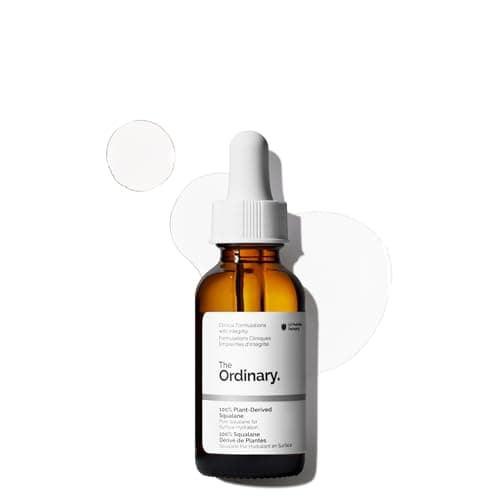
The Ordinary 100% Plant-Derived Squalane
9.2A single-ingredient, plant-derived squalane in a full 30 ml bottle at a low price, stocked almost everywhere — the default pick for most people.
Read our review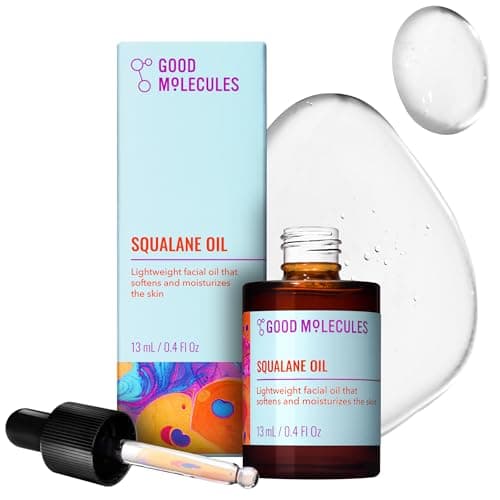
Good Molecules Squalane Oil
8.9The lowest sticker price of any 100% squalane here — but in a 13 ml bottle, so it's the cheapest way to try the ingredient, not the cheapest way to keep using it.
Read our review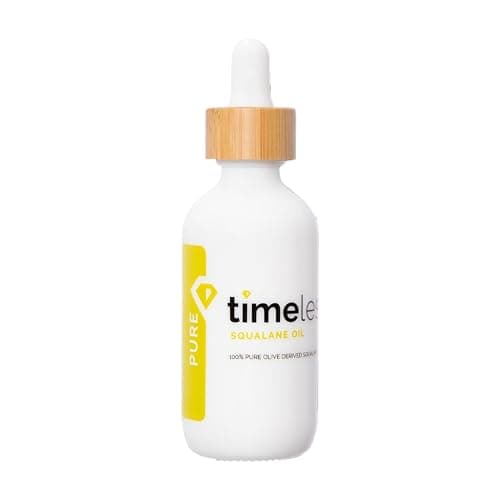
Timeless Skin Care 100% Pure Squalane
9.0A double-size, fragrance-free 100% squalane that usually lands at the lowest cost per ounce of any pick here.
Read our review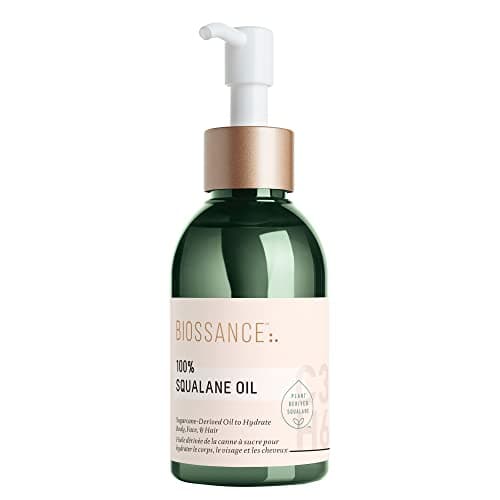
Biossance 100% Squalane Oil
8.8A sustainably sourced, sugarcane-derived squalane in a larger bottle — the polished pick if you want brand pedigree and a bigger size.
Read our reviewWhat not to put on, and for how long
Dermaplaning removes the outermost dead cells, which is the same mechanism that makes products penetrate better afterward — Cleveland Clinic notes the exfoliation may help products absorb. That cuts both ways. An active that your skin tolerates on a normal Tuesday can sting or over-deliver on a freshly planed face.
- Retinoids — retinol, retinal, adapalene, tretinoin. Leave them for the next evening at the earliest. Squalane and retinol and squalane with tretinoin cover how to rebuild the pairing afterward.
- Exfoliating acids — glycolic, lactic, salicylic, mandelic. You have just exfoliated mechanically; doing it chemically on the same face on the same day is how people end up with a compromised barrier. See squalane and glycolic acid and squalane and salicylic acid.
- Vitamin C, particularly a low-pH L-ascorbic acid serum. It is the single most common source of "my face burned after dermaplaning." Squalane and vitamin C has the sequencing.
- Benzoyl peroxide and azelaic acid — both are fine products and neither belongs on the same day. Squalane and benzoyl peroxide, squalane and azelaic acid.
- Anything fragranced, including essential oils and the botanical blends that read as natural. This is the one category we would avoid on principle rather than on a timeline.
- Alcohol-heavy toners and astringents. No upside on a barrier that has just been thinned.
Frequency, and who should not dermaplane at all
Cleveland Clinic's at-home guidance is explicit on frequency: no more than once a week, to let skin recover, and specifically not daily or every other day. It also addresses the thing everyone worries about — shaving does not make hair grow back thicker; a blunt cut tip can feel coarser as it grows in and that is temporary.
On who should skip it, the guidance names active acne breakouts, because dermaplaning can make acne worse, and an eczema flare or other active skin condition, where the recommendation is to see a dermatologist about professional options instead. The clinical page adds cold sore outbreaks, psoriasis, contact dermatitis rashes, moles, freckles, skin tags and other growths, and burned skin including radiation burns, as reasons to talk to a provider first. If any of that applies to you, the squalane question is not the question — ask a clinician about the procedure.
Squalane itself is not a reason to hesitate: it is one of the better-tolerated ingredients in cosmetics and genuine allergy to it is rare, which we cover in can you be allergic to squalane? If you manage rosacea, eczema or seborrheic dermatitis, the oil is likely fine and the blade is the part to ask about.
The verdict
Use a pure squalane oil, two or three drops, on damp skin, then sunscreen. Buy The Ordinary if you want one bottle that is right for this and for the rest of your routine; buy Good Molecules if this is genuinely the only thing you want it for and you would rather spend the least; buy Timeless if squalane is already your everyday moisturizer and cost per ounce is what you optimize.
And the part that is worth repeating because it contradicts most of this site: do not buy the big bottle for this. On best squalane oil and best squalane oil for gua sha volume is the thing you are paying for and should want. Here the dose is a few drops a week, and the bottle you will actually finish is the better purchase than the bottle with the better unit price.
Sources
- Cleveland Clinic — Dermaplaning at Home: Benefits & How It Works
- Cleveland Clinic — Dermaplaning: What It Is, Benefits & Side Effects
- American Academy of Dermatology — Dermatologists' Top Tips for Relieving Dry Skin
- Cleveland Clinic — Squalane: Benefits and How To Use It
- Healthline — Squalane: Benefits, Uses, and Side Effects
- PMC — Squalene and skin barrier function (PMC6253993)
Frequently asked questions
Can you use squalane oil after dermaplaning?
Yes, and a single-ingredient squalane oil is one of the better choices for it. Cleveland Clinic's at-home dermaplaning guidance says to moisturize well and keep wearing sunscreen afterward, and pure squalane is a well-tolerated emollient with no fragrance, no actives and nothing in it that is likely to sting freshly exfoliated skin. Apply two or three drops to damp skin, then sunscreen if it is daytime.
How soon after dermaplaning can I apply squalane?
As soon as the skin is clean and patted to damp. There is no waiting period for a plain emollient - the waiting period applies to actives. What you should not do is apply it over debris, so rinse or wipe the loosened cells off first.
Should I use squalane as a glide while dermaplaning?
We are not going to recommend either way, because we could not find authoritative guidance on using a slip product during the pass. What the published guidance does cover is the technique and the aftercare: go slowly, use a tool with a guard, clean the blade before and after, and moisturize and wear sunscreen afterward. That is the part we are confident about.
What should you not put on your face after dermaplaning?
Anything active or fragranced for the rest of that day: retinoids, exfoliating acids including glycolic and salicylic, low-pH vitamin C serums, benzoyl peroxide, azelaic acid, alcohol-heavy toners, and essential-oil blends. Dermaplaning removes the outermost dead cells, which Cleveland Clinic notes can help products absorb better - so an active you normally tolerate can over-deliver on a freshly planed face.
How often can you dermaplane at home?
Cleveland Clinic's guidance is no more than once a week, to give skin time to recover, and specifically not daily or every other day. It also says to avoid it during an acne breakout, since it can make acne worse, and to see a dermatologist rather than dermaplane during an eczema flare or other active skin condition.
Which squalane oil is best after dermaplaning?
The Ordinary 100% Plant-Derived Squalane for most people: one ingredient, 30 ml, low price, available everywhere. Good Molecules Squalane Oil at 13 ml if this is the only thing you want it for, because the dose is a few drops a week and the small bottle is the one you will finish. Timeless Squalane Oil if squalane is also your everyday moisturizer, since it has the best cost per ounce of the four.
Is squalane better than a cream after dermaplaning?
Not better, simpler. A good fragrance-free cream will also do the job and will add humectants that pure squalane does not have. The argument for a single-ingredient oil on this particular day is the ingredient count - fewer things on the label is fewer things that can sting a barrier that has just been thinned. If you prefer a cream, pick a fragrance-free one and see our moisturizer picks.
Does squalane help skin heal after dermaplaning?
We would not put it that way, and we have not found evidence that it speeds healing or reduces redness. What it does is slow water loss through the surface, which is what a moisturizing step is for and what the aftercare guidance asks for. Treat it as the moisturizer the guidance recommends, not as a treatment.
Do I still need sunscreen after dermaplaning if I use squalane?
Yes, and sunscreen is the more important of the two. Squalane offers no UV protection at all. Cleveland Clinic's at-home guidance pairs moisturizing with continuing to wear sunscreen, and the clinical page on the in-office procedure goes further, advising sun avoidance until skin returns to its normal color. The oil goes on first, sunscreen on top.
Is at-home dermaplaning the same as the in-office procedure?
No, and the aftercare differs enormously. At-home dermaplaning uses a facial razor, lightly disrupts the barrier and may leave skin a little irritated for a day or so. The in-office procedure uses a dermatome and Cleveland Clinic describes redness and swelling subsiding over about a week, a possible scab at around two weeks, and sun avoidance that can run six to twelve months. If you had the professional version, follow your provider's instructions and ask them before adding any product.
Keep reading
Want the full ranking on cost per ounce?
Four single-ingredient squalane oils ranked on purity and cost per ounce, computed from the live price and the listed bottle size.
See the best squalane oils