Squalane for Sebaceous Filaments
The little gray threads on your nose are not blackheads, and nothing gets rid of them for good. What squalane is actually for here is stopping you from making them worse.

We may earn a commission if you buy through our links, at no extra cost to you. Prices are pulled live from Amazon and can change. How this works.
Start with the part that makes the rest of this page make sense. Cleveland Clinic describes sebaceous filaments as thin, threadlike structures that line your oil glands and carry sebum to the surface, and calls them "a normal, healthy element of your skin." Everyone has them. They are the plumbing of a working pore, not a flaw in it.
Quick answer. Squalane does not remove sebaceous filaments, because nothing does — Cleveland Clinic's position is flatly that "you can't get rid of sebaceous filaments," though you can make them less noticeable. What squalane is genuinely useful for is the two things the guidance actually recommends and that most people get wrong: it breaks the over-washing cycle that makes filaments more visible, and it is the moisturizer that makes a retinoid tolerable enough to keep using. Those are real roles. Dissolving the filaments is not one of them.
Filaments are not blackheads, and the difference decides the treatment
This is the single most useful distinction on the subject, and almost all the bad advice comes from collapsing it.
A blackhead is a form of acne. There is a plug of sebum and dead skin sitting at the opening of the pore, oxidized dark at the surface, and it looks like a dark speck in a slight bump. A sebaceous filament has no plug at all: the oil flows freely through it, which is the point of it. Cleveland Clinic describes filaments as usually smaller and flat rather than raised, and gray, light brown or yellow rather than black. They are most visible on the nose, forehead, chin and cheeks, and also occur on the arms, legs, chest and breasts.
Why it matters: a blackhead is something to clear, and a filament is a structure. If you treat a filament like a blackhead — extraction, pore strips, a scrub with grit in it — you are applying a removal method to something that is not blocked, on skin that then has to recover from the removal. Cleveland Clinic is specific about both: squeezing or extracting may release a waxy thread or a little oil, but the pores refill within about 30 days, and using your nails can irritate or damage the skin. Pore strips can remove filaments, but may dry the skin and allow bacteria in that can cause acne.
The loop squalane actually breaks
Here is the mechanism in the guidance that nobody acts on. Among the reasons Cleveland Clinic gives for filaments becoming more visible is poor skin maintenance — specifically that excessive sun exposure or over-washing can dry the skin, prompting the glands to make more oil. The other two reasons it names are age, with oil production rising around puberty and pores enlarging in the forties and fifties as skin loosens, and thicker hair follicles. Of those three, exactly one is something you are doing.
So the common sequence is a loop. You notice the threads on your nose. You attack the nose: a stronger foaming wash, twice a day, plus a scrub, plus a strip at the weekend. The nose dries out. The glands respond by producing more oil. The filaments fill faster and read more obviously. You conclude the products are not strong enough.
A non-comedogenic emollient is what lets you step out of that. Squalane is rated 0 to 1 on the comedogenic scale — the caveats about that scale are in is squalane comedogenic? — and it is the one facial oil routinely suggested to oily and acne-prone skin for that reason. Moisturizing an oily nose feels counterintuitive and is the correct move: it removes the dryness signal without adding anything that can block the pore. Squalane for oily skin makes the full argument.
What this does NOT mean: squalane shrinks pores, dissolves filaments, or reduces oil production. It does not do any of those. The claim is narrower and still worth acting on — it lets you stop over-washing, and over-washing is on the published list of things that makes filaments more visible.
The second real role: making a retinoid survivable
The treatments Cleveland Clinic actually recommends for making filaments less noticeable are gentle exfoliation, salicylic acid as an over-the-counter cleanser or lotion, and retinoids — it names Retin-A, Tazorac and Differin, the last of which is now available without a prescription. And it gives the standard mitigation for the standard problem: side effects like peeling can be reduced by using them every other day, or with a moisturizer.
That is where squalane does its most useful work on this concern, and it is not a glamorous role: it is the moisturizer. The reason most people stop using a retinoid is not that it did not work, it is that week three was uncomfortable and they quit before the thing that needed twelve weeks had twelve weeks. A single-ingredient oil that adds nothing to react with is close to an ideal buffer. Squalane and retinol covers the layering, and squalane with tretinoin covers the prescription version including the sandwich method.
Same for the acid. If you use a salicylic acid cleanser or lotion on your nose — the over-the-counter option the guidance names — squalane afterward is what keeps it sustainable. Squalane and salicylic acid has the sequencing. We do not rank salicylic acid products on this site and are not going to pretend to; buy a plain one and put squalane on after it.
What about oil cleansing? A partial yes
The most popular squalane-adjacent claim here is that oil cleansing dissolves the contents of a filament, on the like-dissolves-like principle. There is something to it and it is worth being precise about the size of it.
Sebum is oil, and an oil-based cleanser dissolves oil in a way a surfactant wash does not — that is a real mechanism and it is the reason the Ordinary Squalane Cleanser removes water-resistant sunscreen that a foaming wash slides over. Massaged over the nose it will soften and lift some of the visible content of a filament, and your nose will genuinely look smoother afterward.
The honest limit is the thirty-day number from the extraction advice. The filament refills, because refilling is its job. Oil cleansing gets you the same temporary improvement as a careful extraction without the irritation, the broken capillaries or the bacteria that Cleveland Clinic warns about with pore strips — which makes it the better version of a thing that was always going to be temporary, not a cure. Treat it as maintenance on roughly a monthly cycle and you will be about right. Best squalane cleanser ranks the field, and best squalane makeup remover ranks the removal job specifically.
A routine that does not make it worse
- Cleanse twice a day, gently, and stop there. The number of washes is not the lever; what you wash with is. A mild cleanser at a skin-compatible pH, not a stripping one, and not a third wash because the nose looked oily at lunchtime.
- Oil-cleanse at night if you wear makeup or sunscreen. This is where a squalane balm earns its place - it dissolves sebum and SPF in the same pass. Massage the nose for thirty seconds rather than two minutes.
- Moisturize the nose. Including the nose. Two drops of squalane on damp skin - see squalane on damp skin, because squalane has no humectant action and can only hold water that is already there.
- Add one active, slowly. A retinoid most evenings, or a salicylic acid product, not both at once and not daily from day one. Every other day is the published mitigation and it is also how people stay on it.
- Sunscreen every morning. Excessive sun exposure is on the list of things that makes filaments more visible, alongside over-washing. Squalane before or after sunscreen covers the order.
- Leave them alone otherwise. No strips, no metal extractor, no nails, no gritty scrub on the nose.
The picks
Three products, each doing one of the three jobs above. Note that the second one is not a squalane product at all, and is here for a specific reason.
The oil cleanse: The Ordinary Squalane Cleanser
A squalane-based balm that melts to a milk, with squalane as the cleansing agent rather than a token addition. It is the product that does the softening job described above, and it removes sunscreen in the same pass so you are not cleansing twice. Cons: it is the most expensive of The Ordinary's three cleansers, the balm texture divides people, and it needs a thorough rinse or a damp cloth. Full detail in the review.
The gentle wash: The Ordinary Glucoside Foaming Cleanser
This one contains no squalane, and it is on this page precisely because the behavioral fix is to stop stripping your nose. It is eight ingredients long, at a brand-published pH of 5.0 to 6.0 — inside the range skin itself sits at — built on mild non-ionic sugar surfactants, and it carries a National Eczema Association Seal of Acceptance. If the wash you are currently using on your nose is a strong foaming one, this is the swap. Cons: no emollient at all, so the moisturizing step is doing all of that work; it will not remove makeup or SPF on its own; and foaming textures still read as tight on genuinely dry skin. The three-way comparison is The Ordinary Squalane vs Glucoside vs Glycolipid.
The moisturize step: The Ordinary 100% Plant-Derived Squalane
One ingredient, 30 ml, cheap, available everywhere. This is the step that removes the dryness signal and the buffer that keeps a retinoid tolerable. Cons: the dropper is basic, it is not the cheapest bottle at checkout, and the brand states plant derivation without naming the crop. If your skin is oily enough that two drops is still too much, Good Molecules Squalane Oil at 13 ml is the smaller-dose option — see best squalane oil for oily skin, which ranks on dose rather than on cost per ounce.
The three, with live prices
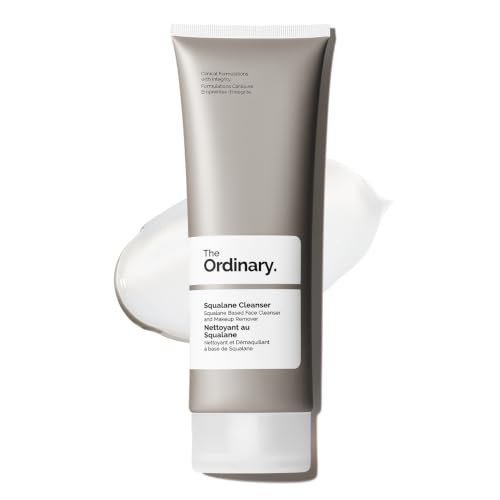
The Ordinary Squalane Cleanser
8.9A squalane-based melting balm cleanser that dissolves makeup and sunscreen without stripping the barrier — the standout squalane cleanser.
Read our review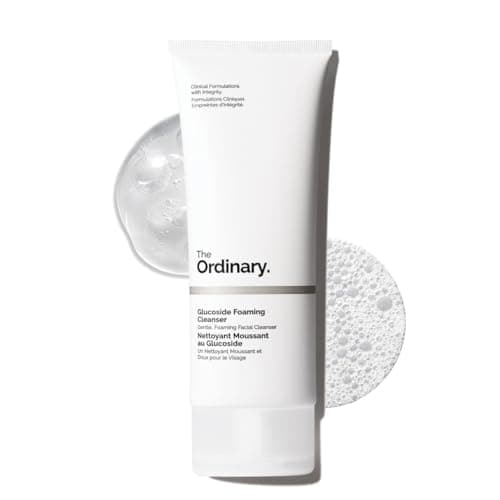
The Ordinary Glucoside Foaming Cleanser
6.7An eight-ingredient foaming wash at pH 5.0-6.0 with a National Eczema Association Seal of Acceptance — about as short and as mild as a surfactant cleanser gets. It also contains no squalane and no emollient, so it takes oil off and leaves nothing behind.
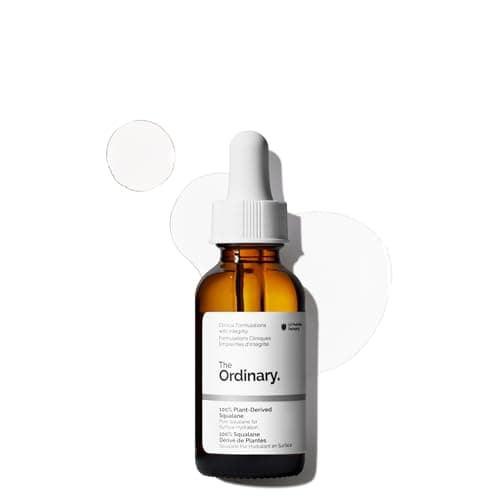
The Ordinary 100% Plant-Derived Squalane
9.2A single-ingredient, plant-derived squalane in a full 30 ml bottle at a low price, stocked almost everywhere — the default pick for most people.
Read our reviewWhen it is not filaments
If what you are looking at is raised, has a dark speck in it, or appears in places sebaceous filaments do not favor, treat it as acne rather than as plumbing. The American Academy of Dermatology's acne management guidance is the right starting point, and on this site squalane for acne-prone skin and can squalane cause breakouts? cover where squalane does and does not belong in an acne routine. If small bumps are uniform, itchy and clustered rather than threadlike, the thing to rule out is fungal acne, which is a different organism and a different screen.
And if over-the-counter products have not helped, Cleveland Clinic's own next step is a healthcare provider, who can prescribe medications that reduce oil production. That is a real option and nothing on this page is a substitute for it.
The verdict
Squalane is not a treatment for sebaceous filaments and there is no treatment for sebaceous filaments, because they are a normal part of a working pore. What is available is making them less noticeable, and the published route to that is gentle exfoliation, salicylic acid or a retinoid, plus not drying your skin out.
Squalane's role is the unglamorous two-thirds of that: it is the cleansing agent that softens without stripping, and the moisturizer that lets you keep using the active that actually does the work. The thing most people need to hear is not which oil to buy. It is that the nose they have been scrubbing for a year is producing more oil because they have been scrubbing it. Our verdict here is the same shape as on keratosis pilaris and seborrheic dermatitis: moisturizer yes, treatment no.
Sources
- Cleveland Clinic — Sebaceous Filaments: Difference From Blackheads & Treatment
- American Academy of Dermatology — Acne: Tips for Managing
- MedlinePlus (NIH) — Salicylic Acid Topical: drug information and precautions
- American Academy of Dermatology — Face Washing 101
- Cleveland Clinic — Squalane: Benefits and How To Use It
- Healthline — Squalane: Benefits, Uses, and Side Effects
Frequently asked questions
Does squalane get rid of sebaceous filaments?
No. Cleveland Clinic's position is that you cannot get rid of sebaceous filaments at all - they are a normal, healthy part of your skin, lining the oil glands that carry sebum to the surface - though you can make them less noticeable. Squalane does not dissolve them, shrink pores or reduce oil production. Its useful roles are as a non-stripping cleansing agent and as the moisturizer that makes a retinoid or a salicylic acid product tolerable.
Are sebaceous filaments the same as blackheads?
No, and the difference decides the treatment. A blackhead is a form of acne with a plug of sebum and dead skin at the pore opening; it looks like a dark speck in a bump. A sebaceous filament has no plug - oil flows freely through it - and is usually smaller, flat, and gray, light brown or yellow. Blackheads can be cleared; filaments cannot, because they are a structure rather than a blockage.
Can squalane oil make sebaceous filaments worse?
There is no particular reason to expect it to. Squalane is commonly rated 0 to 1 for comedogenicity and is the facial oil most often suggested to oily and acne-prone skin. The more likely source of filaments becoming more visible is the opposite behavior: Cleveland Clinic names over-washing among the things that dry the skin and prompt the glands to produce more oil. If your skin does react to any product, stop it and see our page on squalane allergy.
Does oil cleansing remove sebaceous filaments?
It softens and lifts some of their visible content, which is a real effect, and it is temporary. The same guidance that says squeezing releases a waxy thread also says the pores refill within about 30 days. Oil cleansing gets you that temporary improvement without the irritation, broken capillaries or bacteria risk that come with extraction and pore strips, so treat it as roughly monthly maintenance rather than a fix.
Should I use pore strips on sebaceous filaments?
We would not. Cleveland Clinic notes pore strips can remove filaments but may dry the skin and allow bacteria in that can cause acne - and drying the skin is itself on the list of things that makes filaments more visible, because the glands respond by making more oil. An oil cleanse achieves the cosmetic part without that trade.
What actually makes sebaceous filaments less noticeable?
The treatments Cleveland Clinic names are gentle exfoliation, over-the-counter salicylic acid as a cleanser or lotion, and retinoids including Retin-A, Tazorac and Differin, the last now available without a prescription. It also notes retinoid peeling can be reduced by using them every other day or alongside a moisturizer. If those do not help, a provider can prescribe medication that reduces oil production.
Why do sebaceous filaments look worse on my nose?
The nose, forehead, chin and cheeks are where they are most visible, because that is where oil glands are densest. Cleveland Clinic names three things that make them more prominent: age, with oil production rising around puberty and pores enlarging in the forties and fifties as skin loosens; poor skin maintenance, specifically excessive sun exposure or over-washing drying the skin and prompting more oil; and thicker hair follicles.
Which squalane product should I use for sebaceous filaments?
A squalane balm cleanser for the oil-cleansing step, because the squalane is the cleansing agent rather than a token ingredient, and a plain single-ingredient squalane oil as the moisturizer afterward and as the buffer under a retinoid. The third thing worth changing is the wash you use the rest of the time - swapping a stripping foaming cleanser for a mild one at a skin-compatible pH does more here than any squalane product will.
Is it bad to have sebaceous filaments?
No. Everyone has them, and Cleveland Clinic calls them a normal, healthy element of your skin. They are how sebum reaches the surface. The reason people want to do something about them is cosmetic, which is a legitimate reason - it is just worth knowing you are managing an appearance rather than correcting a problem.
Keep reading
Gentle cleansing, ranked
Every squalane cleanser we cover, ranked on how high the squalane sits on the list and what the formula leaves behind, with live prices.
See the best squalane cleansers