Squalane for Seborrheic Dermatitis
Seborrheic dermatitis is driven by a yeast that lives on your skin's own oils, which is why most moisturizing oils are a bad idea here. Squalane is the exception, and this page is specific about why — and about what it will not do.
We may earn a commission if you buy through our links, at no extra cost to you. Prices are pulled live from Amazon and can change. How this works.
Seborrheic dermatitis is the condition behind dandruff, the greasy-looking flakes along the sides of the nose, the scaly patches in the eyebrows and the flaking at the hairline and in the beard. The American Academy of Dermatology describes it as a common, chronic form of eczema that tends to appear where skin is oiliest — scalp, face, ears, chest and back — and that flares and settles rather than simply clearing. MedlinePlus notes the same distribution and the same long-running pattern.
Here is the part that makes it awkward to moisturize. Seborrheic dermatitis is strongly associated with *Malassezia*, a yeast that is a normal resident of human skin and that lives on sebum — specifically on the fatty acids it can liberate from the lipids in your oil. That is why the condition clusters on oily areas, and it is also why reaching for a nourishing plant oil so often makes a flare worse rather than better. You are moisturizing with the organism's food.
The short answer about squalane: it will not treat seborrheic dermatitis, and nothing on this page should be read as a treatment. What it does is solve the moisturizing problem, because squalane is a saturated hydrocarbon with no fatty acids and no ester bonds in it, which means *Malassezia* cannot metabolize it. It is the one widely sold facial oil you can use on seb-derm-prone skin without handing the yeast a meal — and on skin that is simultaneously flaking from the condition and stripped by the antifungal treating it, that turns out to matter a great deal.
Squalane is a moisturizer, not a treatment. The things that actually reduce seborrheic dermatitis are antifungals — ketoconazole, zinc pyrithione, selenium sulfide, ciclopirox — plus, for inflamed flares, what a clinician prescribes. Use squalane alongside those, never instead of them.
Why most oils are the wrong choice here
The distinction that decides everything is chemical, and it is simpler than it sounds. Nearly every oil sold for skin — jojoba, rosehip, argan, marula, sunflower, coconut, almond, avocado — is a triglyceride: three fatty acids attached to a glycerol backbone. *Malassezia* produces lipases that cleave those bonds, freeing the fatty acids and using them. Esters behave the same way, which is why ingredients such as caprylic/capric triglyceride, ethylhexyl palmitate and the polysorbates get excluded from a careful screen too.
Squalane is not a triglyceride. It is a 30-carbon saturated hydrocarbon — no glycerol, no fatty acids, no ester bonds, nothing to cleave. Is squalane an oil? works through that chemistry properly, and it is the single fact that explains why squalane keeps turning up as the exception in every fungal-acne and seb-derm discussion. It also explains squalane's other useful properties here: because it is fully saturated it does not oxidize readily, and an oxidized oil on already-inflamed skin is its own irritant.
The same screen is what our fungal-acne-safe buying guide applies across every product we cover, and the result is blunt: of the twenty-five products in our catalog, only the four single-ingredient squalane oils pass it. Every cream, serum, lotion and cleanser fails on something — a fatty alcohol, a triglyceride, a seed oil, a polysorbate. If you are managing seborrheic dermatitis, that is the shortlist you are working from, and the only decision left is bottle size.
Where seb derm shows up, and what squalane does in each place
Scalp
The scalp is where most people meet this condition and where squalane is least useful on its own, because the scalp is where the antifungal does the work. The AAD's treatment guidance for adults centers on medicated shampoos, and MedlinePlus lists ketoconazole shampoo among the standard options; ketoconazole is specifically an antifungal, which tells you what is being targeted. Squalane's job on a scalp is narrower: medicated shampoos used two or three times a week are drying, and a dry, tight, flaking scalp is both uncomfortable and easy to confuse with the condition itself. A few drops of plain squalane worked into the scalp on a non-shampoo night relieves that without adding lipids the yeast can use.
Two practical notes. Apply it to the scalp, not the hair — part the hair in sections and put the oil where the skin is, which is a different motion from running oil through your ends. And do not treat it as a pre-wash oiling ritual with a heavy carrier oil mixed in; the point of using squalane here is that it is the only lipid in the equation. Squalane for your scalp covers the technique in more detail.
Face — the nose folds, brows and hairline
On the face this is where squalane earns its place. The classic facial pattern is scaling and redness in the nasolabial folds, across the eyebrows and along the hairline, and it is usually being treated with something drying. Squalane applied to slightly damp skin after cleansing softens the scale, reduces the tightness, and leaves nothing behind that feeds the yeast. It also will not sting, because pure squalane has no fragrance, no alcohol and nothing else on the label — a genuine advantage on skin that is cracked at the corners of the nose.
What it will not do is clear the patch. Flaking that keeps returning in the same place is the condition, not dryness, and an emollient softens the appearance without changing the cause. If you have been moisturizing a persistent flaky patch for weeks and it keeps coming back, that is the signal to get it looked at rather than to buy a richer cream.
Beard area and chest
Seborrheic dermatitis in the beard is the same condition as scalp dandruff in a different location, and it is commonly mistaken for simple beard dryness. Squalane is a good beard oil for exactly the reason it is a good seb-derm moisturizer — it is a carrier oil with nothing added, where most beard oils are a seed-oil carrier plus fragrance, and both of those components are poor choices here. Squalane for your beard covers dosing for stubble versus a full beard. On the chest and upper back, the same screen applies and the same answer follows: the body lotions we recommend elsewhere are good lotions and are not fungal-acne safe, so a plain oil is the safer choice on skin where you manage this.
What to use, and why the choice is only about size
Because the screen leaves only single-ingredient squalane oils standing, there is no formulation to compare — all three below are the same molecule at the same purity with nothing else on the label. The order is therefore by the thing that actually differs: how much oil you get, matched to how much area you are treating. Seborrheic dermatitis is rarely one small patch; scalp plus face plus beard is a lot of surface, and the oil that runs out is the one you stop using.
Single-ingredient squalane, ranked by how much area you are treating
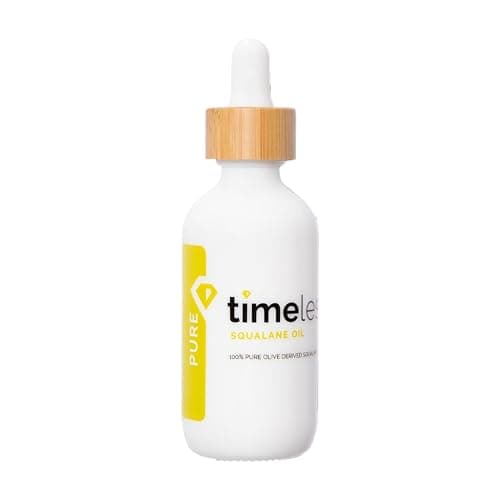
Timeless Skin Care 100% Pure Squalane
9.0A double-size, fragrance-free 100% squalane that usually lands at the lowest cost per ounce of any pick here.
Read our review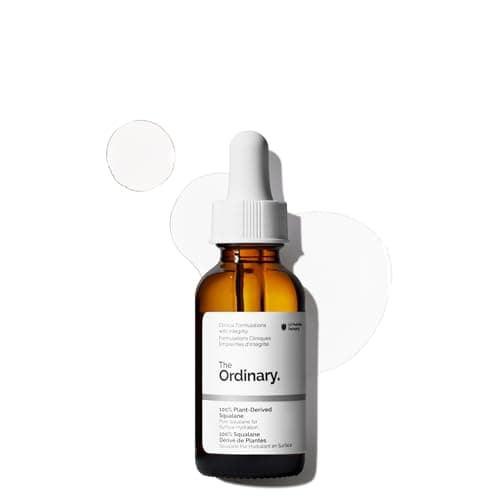
The Ordinary 100% Plant-Derived Squalane
9.2A single-ingredient, plant-derived squalane in a full 30 ml bottle at a low price, stocked almost everywhere — the default pick for most people.
Read our review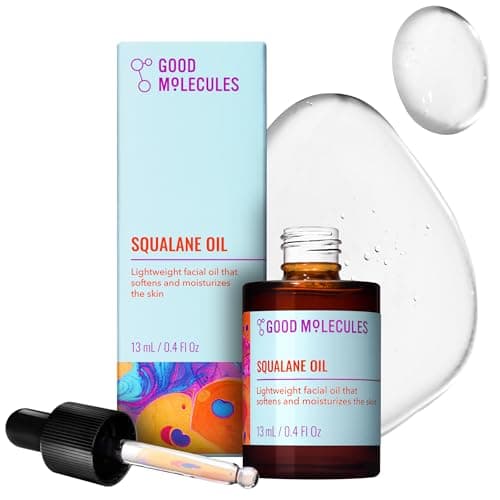
Good Molecules Squalane Oil
8.9The lowest sticker price of any 100% squalane here — but in a 13 ml bottle, so it's the cheapest way to try the ingredient, not the cheapest way to keep using it.
Read our reviewTimeless Skin Care 100% Pure Squalane is first because a 2 fl oz bottle covers scalp and face daily without rationing, and it has been the cheapest per ounce of the group at every price check we have run. The cons are real and mild: plain packaging, a basic dropper rather than a pump, and the brand does not name which plant its squalane comes from.
The Ordinary 100% Plant-Derived Squalane is second on a 30 ml bottle. It is the one you can buy almost anywhere, which matters when you want to start tonight, and it names sugarcane as its source. Its drawback here is simply volume — 30 ml does not go far across a scalp, and heavy users will be reordering.
Good Molecules Squalane Oil is third and is the cheapest way to find out whether you like the finish before committing. Be clear-eyed about the trade: at 13 ml it is the most expensive oil per ounce of the three and will not last a week of scalp use. Buy it to test, not to treat.
One omission worth naming. We are not recommending a squalane cleanser for this, even though "squalane cleanser for seborrheic dermatitis" is a question people ask. None of the three cleansers we cover is a squalane-only formula — each contains surfactants, esters or fatty alcohols that fail the screen — and while a rinse-off product has far shorter contact with your skin than a leave-on one, that is a trade to discuss with a clinician rather than a recommendation for us to make. Is a squalane cleanser good for acne-prone skin? works through the same contact-time argument honestly.
How to use it without making things worse
- Treat first, moisturize second. Whatever your antifungal is — a medicated shampoo, a prescription cream — that goes on as directed. Squalane is the step after, not a substitute.
- Apply to damp skin. Squalane attracts no water of its own; it slows the loss of water already there. Two or three drops on a damp face does more than five on a dry one. Squalane on damp skin explains why.
- Use less than you think. Two or three drops for the face, three or four worked into a sectioned scalp. More oil is not more relief, and a greasy scalp is uncomfortable for separate reasons.
- Keep the rest of the routine boring. The point of a one-ingredient oil is undone by layering a fragranced cream over it. Fragrance-free, short ingredient lists, nothing new introduced during a flare.
- Change one thing at a time. Seb derm flares and settles on its own schedule, so if you add three products at once you will not know which helped. Give any single change two to three weeks.
- Stop if it stings or worsens. An emollient should be uneventful. If it is not, the problem is a reaction, not a dose — can you be allergic to squalane? covers how to work out what reacted.
What squalane will not do
Being direct about this is the point of the page, because the gap between "safe to use" and "treats the condition" is where most of the bad advice online lives:
- It has no antifungal activity. It does not kill *Malassezia*, reduce its population or inhibit it. It simply does not feed it. Those are very different claims.
- It is not anti-inflammatory. The redness of a flare is inflammation, and an emollient does not address inflammation. That is what the medicated treatments and, where needed, a prescription are for.
- It will not stop the flakes returning. Scale that regrows in the same place every week is the condition expressing itself on a cycle. Softening it is comfort, not control.
- It is not a replacement for a diagnosis. Seborrheic dermatitis looks like several other things — psoriasis on the scalp in particular, which our psoriasis guide covers separately. If nobody has actually looked at it, that is the next step, not a different oil.
The useful way to hold all of this: squalane solves the moisturizing problem that seborrheic dermatitis creates, and solves nothing else. That is a genuinely valuable thing in a condition where most moisturizers are a trade-off and many oils are counterproductive — but it is a supporting role, and anyone selling it as more than that is selling you something.
Sources
- American Academy of Dermatology — Seborrheic Dermatitis: Overview
- American Academy of Dermatology — Seborrheic Dermatitis: Diagnosis and Treatment
- MedlinePlus (NIH) — Seborrheic Dermatitis: Medical Encyclopedia
- MedlinePlus (NIH) — Ketoconazole Topical: drug information and directions
- Cleveland Clinic — Squalane: Benefits and How To Use It
- Healthline — Squalane: Benefits, Uses, and Side Effects
Frequently asked questions
Is squalane good for seborrheic dermatitis?
It is good as the moisturizing step, and it is not a treatment. Squalane is a saturated hydrocarbon with no fatty acids or ester bonds, so the Malassezia yeast associated with seborrheic dermatitis cannot metabolize it - which makes it the rare facial oil that does not risk feeding the organism. What reduces seborrheic dermatitis is antifungal treatment, not an emollient.
Can squalane make seborrheic dermatitis worse?
Pure squalane is unlikely to, because there is nothing in it for the yeast to use and nothing to irritate inflamed skin. The realistic risks are the other ingredients in squalane products - fragrance, essential oils, seed oils, fatty alcohols and esters all appear in squalane creams and serums, and those can feed Malassezia or sting. If you manage this condition, use a single-ingredient squalane oil rather than a formula with squalane in it.
Does squalane oil help scalp seborrheic dermatitis?
Indirectly. It relieves the dryness and tightness that medicated shampoos cause, without adding lipids the yeast can use, so it is a sensible thing to use on a non-shampoo night. It does not reduce the condition itself - the medicated shampoo does that. Apply a few drops to a sectioned scalp rather than running it through your hair.
What actually treats seborrheic dermatitis?
Antifungal treatment. The American Academy of Dermatology's guidance for adults centers on medicated shampoos and topical antifungals, and MedlinePlus lists ketoconazole shampoo among the standard options; zinc pyrithione, selenium sulfide and ciclopirox are used the same way. Inflamed flares sometimes need a prescription. An emollient like squalane supports comfort alongside those and replaces none of them.
Is squalane fungal-acne safe, and is that the same thing?
Squalane is considered fungal-acne safe, and the mechanism is the same one that matters for seborrheic dermatitis - both involve Malassezia, which feeds on fatty acids and esters rather than on saturated hydrocarbons. They are not the same condition, though. Fungal acne is a folliculitis; seborrheic dermatitis is a chronic form of eczema with a different appearance and distribution.
Which squalane should I buy for seborrheic dermatitis?
A single-ingredient oil, and then it is only a question of size. Of the products we cover, only the four pure squalane oils pass a Malassezia screen - every cream, serum and cleanser fails on a triglyceride, an ester or a fatty alcohol. A 2 fl oz bottle is the sensible buy if you are treating scalp and face, since that is a lot of area to cover daily.
Can I use squalane on seborrheic dermatitis in my eyebrows and nose folds?
Yes, and this is where it is most useful on the face. Pure squalane has no fragrance and no alcohol, so it will not sting skin that is cracked at the corners of the nose, and applied to damp skin it softens scale and relieves tightness. It will not clear the patch - flaking that keeps returning in the same place is the condition rather than dryness.
Should I use a squalane cleanser for seborrheic dermatitis?
We do not recommend one for this. None of the squalane cleansers on the market is a squalane-only formula, and all of them contain surfactants, esters or fatty alcohols that fail a strict Malassezia screen. A rinse-off product has much shorter contact with your skin than a leave-on one, which genuinely changes the exposure, but that trade is a question for a clinician rather than a buying recommendation.
Is seborrheic dermatitis the same as dandruff?
Dandruff is the mildest form of it on the scalp. Seborrheic dermatitis is the broader condition, and the AAD describes it appearing on the scalp, face, ears, chest and back, with redness and greasy-looking scale rather than just dry flakes. The same antifungal approach underlies treatment across those areas.
Keep reading
See which products pass a Malassezia screen
We read every ingredient list in our catalog against the fatty-acid and ester screen. Only four products pass — and the page names what fails, by ingredient.
See the fungal-acne-safe picks