The Best Fungal-Acne-Safe Squalane
Malassezia can't eat a saturated hydrocarbon — which is why 100% squalane passes a fungal-acne screen and almost every product with squalane in it does not.
We may earn a commission if you buy through our links, at no extra cost to you. Prices are pulled live from Amazon and can change. How this works.
If you are managing fungal acne, the pick is The Ordinary 100% Plant-Derived Squalane: one ingredient, nothing on the list that Malassezia can metabolise, and the cheapest way into the category. For body use — chest, back and shoulders, where fungal acne most often turns up — the Timeless 100% Pure Squalane is the better buy because it is twice the size for a similar price. Those are the two recommendations, and the reason they are both plain oils rather than anything cleverer is the whole subject of this page.
Fungal acne is not acne. The usual name for it is Malassezia folliculitis, and the thing causing the small, uniform, itchy bumps is a yeast that lives on everyone's skin and occasionally overgrows in a hair follicle. Because it is a yeast rather than bacteria trapped behind a plug of oil and dead skin, it responds to antifungal treatment and not to the salicylic acid and benzoyl peroxide that work on ordinary acne — which is exactly why people spend months treating the wrong condition and conclude their skin is unfixable.
What matters for product selection is what the yeast eats. Malassezia cannot synthesise its own fatty acids, so it scavenges them from its environment — which in practice means most plant oils, most fatty acids, many esters of those fatty acids, polysorbates, and a number of fermented ingredients. It cannot use squalane. Squalane is a saturated hydrocarbon: a chain of carbon and hydrogen with no fatty-acid component at all, which is precisely the property that makes it shelf-stable and precisely the property that makes it useless as yeast food. That is the mechanism, and it is why squalane is one of the few emollients that turns up on every fungal-acne-safe list.
Here is the catch, and it is the reason this page exists as a shortlist rather than a long one. The property belongs to the molecule, not to the word on the front of the bottle. A product whose first ingredient is squalane can still carry six esters, a plant oil and a polysorbate further down the list, and the yeast does not care how prominently the squalane is advertised. So we ran the screen across every squalane product on this site, and the result is stark: the four single-ingredient oils pass, and every formulated product fails on a named ingredient.
The failures are worth naming, because they are products we recommend elsewhere and you deserve to know why they are not here. The Ordinary Squalane Cleanser and the CeraVe Hydrating Foaming Oil Cleanser are both excellent cleansers, and a rinse-off product is a lower-risk category in general, but neither is a squalane-only formula. The Outset's moisturizer carries coconut oil tenth on a forty-five-ingredient list. Kiehl's Ultra Facial Cream has seven plant oils and myristyl myristate ninth. The Paula's Choice RESIST Barrier Repair Advanced Moisturizer leads with dicaprylyl carbonate and ethylhexyl stearate and has shea butter behind the squalane. The Naturium Bio-Lipid body lotion puts safflower seed oil second and moringa and rosehip oil above the squalane. The Biossance Squalane + Vitamin C Rose Oil and the Youth To The People Superberry Dream Oil are both oil blends. Every one of those has an ingredient on the fungal-acne exclusion lists. None of them are bad products; they are the wrong products for this one specific problem.
So the ranking below is four bottles of the same molecule, ordered by what you would actually buy them for: cheapest entry, best value per ounce for body-sized areas, largest bottle, and smallest bottle for testing. We are not going to pretend there is a formulation difference between them, because there is not one. The useful decision is size, and the cost-per-ounce table below makes it with live prices.
One important limit before the picks. Squalane being safe to use is not the same as squalane being a treatment. It does not kill the yeast, reduce the overgrowth or clear the bumps. It is the emollient you can use while the actual treatment — usually a topical or oral antifungal from a doctor — does the work, instead of abandoning moisturizer altogether and ending up with a stripped, irritated face as well as folliculitis.
How we picked: we don't run a lab and we don't claim to. We read every ingredient list, compiled the published specs, and computed the cost per ounce below. See our full method.
Quick picks
Our ranked shortlist. Tap a row for the full review, or the price to buy.
| # | Product | Best for | Score | Price |
|---|---|---|---|---|
| 1 | 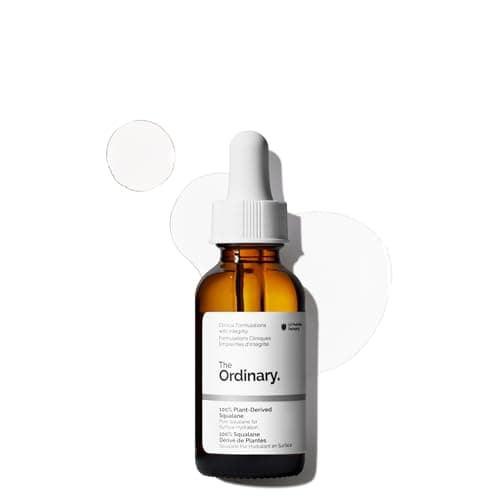 The Ordinary 100% Plant-Derived Squalane A single-ingredient, plant-derived squalane in a full 30 ml bottle at a low price, stocked almost everywhere — the default pick for most people. | Best overall value | 9.2 | |
| 2 | 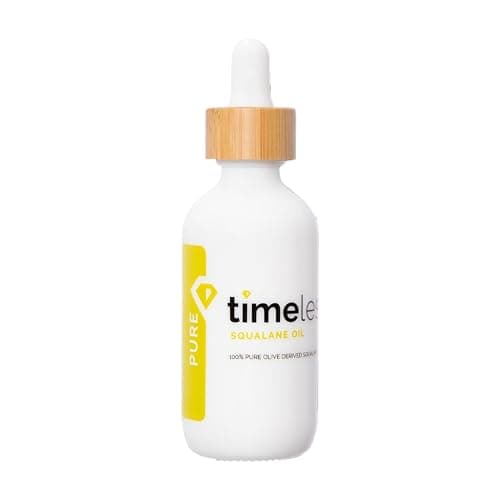 Timeless Skin Care 100% Pure Squalane A double-size, fragrance-free 100% squalane that usually lands at the lowest cost per ounce of any pick here. | Best big-bottle value | 9.0 | |
| 3 | 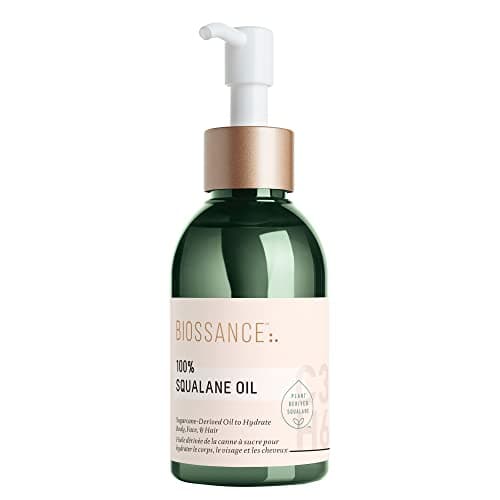 Biossance 100% Squalane Oil A sustainably sourced, sugarcane-derived squalane in a larger bottle — the polished pick if you want brand pedigree and a bigger size. | Best premium pure oil | 8.8 | |
| 4 | 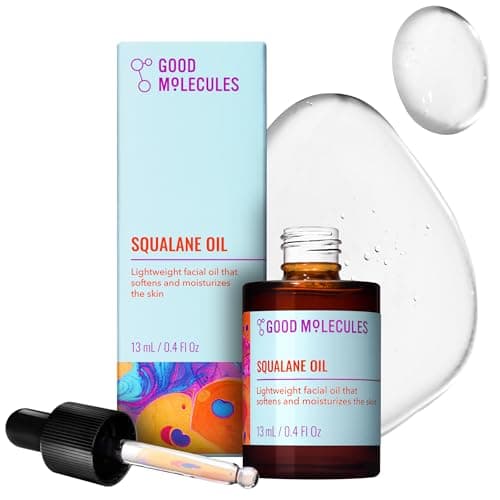 Good Molecules Squalane Oil The lowest sticker price of any 100% squalane here — but in a 13 ml bottle, so it's the cheapest way to try the ingredient, not the cheapest way to keep using it. | Best budget pick | 8.9 |
The Ordinary 100% Plant-Derived Squalane
9.2A single-ingredient, plant-derived squalane in a full 30 ml bottle at a low price, stocked almost everywhere — the default pick for most people.
- Purity
- 100% squalane
- Source
- Plant-derived (sugarcane)
- Size
- 1 fl oz (30 ml)
- Cost / oz
- $10.40/oz
- Best for
- Best overall value
What we like
- 100% squalane, no fillers or fragrance
- One of the lowest entry prices of any name-brand squalane
- Sugarcane-derived and vegan
- Widely stocked, easy to repurchase
Keep in mind
- Small 30 ml bottle
- Simple dropper rather than an airless pump
Skip it only if you want a large-format bottle or airless packaging for oxidative stability.
Price as of October 19, 2026. Prices set by Amazon and change.
#ad · How we make money
Timeless Skin Care 100% Pure Squalane
9.0A double-size, fragrance-free 100% squalane that usually lands at the lowest cost per ounce of any pick here.
- Purity
- 100% squalane
- Source
- Plant-derived (brand states plant-based)
- Size
- 2 fl oz (60 ml)
- Cost / oz
- $8.97/oz
- Best for
- Best big-bottle value
What we like
- 2 fl oz — twice the size of most rivals
- Typically the cheapest per ounce of the bunch
- Fragrance-free, single-ingredient
Keep in mind
- Plain packaging and dropper
- Brand is less widely known than The Ordinary or Biossance
Skip it if you prefer buying a smaller bottle to keep an oil fresh, or want a recognizable label.
Price as of October 19, 2026. Prices set by Amazon and change.
#ad · How we make money
Biossance 100% Squalane Oil
8.8A sustainably sourced, sugarcane-derived squalane in a larger bottle — the polished pick if you want brand pedigree and a bigger size.
- Purity
- 100% squalane
- Source
- Sugarcane-derived (stated on pack)
- Size
- 3.3 fl oz (as listed)
- Cost / oz
- $10.30/oz
- Best for
- Best premium pure oil
What we like
- 100% sugarcane-derived squalane, transparently sourced
- Larger listed size than most single-ingredient rivals
- Vegan and fragrance-free
- Absorbs fast with no greasy finish
Keep in mind
- Higher up-front price than budget oils
- Same molecule as the budget oils — the extra spend buys bottle size and sourcing, not results
Skip it if you only want a small bottle to try squalane — a budget oil costs far less at checkout for the same molecule.
Price as of October 19, 2026. Prices set by Amazon and change.
#ad · How we make money
Good Molecules Squalane Oil
8.9The lowest sticker price of any 100% squalane here — but in a 13 ml bottle, so it's the cheapest way to try the ingredient, not the cheapest way to keep using it.
- Purity
- 100% squalane
- Source
- Plant-derived (100% natural squalane)
- Size
- 0.44 fl oz (13 ml)
- Cost / oz
- $18.18/oz
- Best for
- Best budget pick
What we like
- Lowest sticker price on the list
- 100% squalane, non-greasy
- Good for testing whether squalane suits you before spending more
Keep in mind
- A 13 ml bottle — less than half the size of a standard 30 ml oil, so the cost per ounce is high
- Sold through fewer retailers
Skip it if you already know you like squalane — the larger bottles cost far less per ounce for the same molecule.
Price as of October 19, 2026. Prices set by Amazon and change.
#ad · How we make money
Cost per ounce, compared
Computed from the current Amazon price and the listed size. Prices as of October 19, 2026 and set by Amazon.
Why a saturated hydrocarbon is safe and an ester is not. Malassezia species are lipid-dependent: they lack the enzyme machinery to make their own fatty acids and have to take them from the skin surface, which is why they concentrate in sebum-rich areas like the chest, back, shoulders and T-zone. Feed them a fatty acid, a triglyceride or an ester of one and you have supplied the substrate. Squalane has no ester bond and no fatty-acid chain to cleave — it is carbon and hydrogen, fully saturated, which is also why it does not oxidize the way its cousin squalene does. The same chemistry that makes squalane stable in a bottle for years makes it indigestible to the yeast. That is not a marketing claim; it is the structure.
Reading an ingredient list for this is a learnable skill. The terms worth knowing: anything ending in -ate that follows a fatty-acid name (isopropyl palmitate, ethylhexyl stearate, glyceryl stearate), the plant oils by name, the polysorbates, the fatty alcohols in some cases, and fermented or yeast-derived ingredients such as galactomyces. On the safe side: squalane, mineral oil, petrolatum, dimethicone and most silicones, glycerin, hyaluronic acid, urea, niacinamide, zinc and the common humectants. Many community lists exist and they do not entirely agree with each other, which is a good reason to treat them as a first filter and your own skin as the final one.
The most common mistake is treating it as acne. Fungal acne looks like small, same-sized, often itchy bumps that appear in clusters, usually on the forehead, chest, back or shoulders, and frequently after heat, sweat, occlusive clothing or a course of antibiotics. Ordinary acne is a mix of sizes, is rarely itchy, and includes blackheads. If salicylic acid, benzoyl peroxide and a retinoid have done nothing for months, that pattern is worth showing to a dermatologist specifically to ask whether it is folliculitis — because the treatment is antifungal and nothing in the acne aisle will touch it. We are not able to diagnose it and neither is an ingredient checker.
Where squalane fits alongside actual treatment. Use it as the single moisturizing step: a few drops pressed into slightly damp skin after cleansing, morning and night, under sunscreen in the day. Keep using whatever antifungal your doctor prescribed on the schedule they gave you. Do not layer a stack of new products on top while you are trying to work out what is causing the bumps — one plain oil is diagnostically clean, which is most of its value here. And keep the routine consistent for a few weeks before judging it, because folliculitis clears on the treatment's timeline, not the moisturizer's.
For the body, buy by volume. Fungal acne on the chest, back and shoulders covers far more skin than a face routine, and a 30 ml facial bottle is an expensive way to cover it. The 2 fl oz Timeless bottle and the 3.3 fl oz Biossance bottle exist for exactly this, and the cost-per-ounce table above shows the real gap between them and the small bottles. The other half of body management is non-product: showering promptly after sweating, not sitting around in damp workout clothes, and loose breathable fabrics in heat — all of which matter more than which bottle of squalane you own.
What we deliberately did not do. We did not build this page out of a different ranking of our oils roundup — the order here is driven by what each bottle is for, and the exclusion list above is the actual work. We did not invent a fungal-acne-safe certification, because none exists; what exists is the chemistry and a set of community-maintained ingredient lists. We did not include any cleanser, even though rinse-off products are lower risk, because neither of ours is a squalane-only formula and a partial pass is not a pass. And we did not include a single formulated moisturizer, serum or body lotion, which is an unusual thing for a commercial page to admit and is the honest result of the screen.
The bottom line. For the face, The Ordinary 100% Plant-Derived Squalane: one ingredient, nothing for the yeast to eat, the lowest entry price, stocked nearly everywhere. For the chest, back and shoulders, the Timeless Skin Care 100% Pure Squalane, because it is the same single ingredient at twice the volume and usually the lowest cost per ounce on the page. The Biossance is the pick if you want the largest bottle and stated sugarcane sourcing; the Good Molecules 13 ml bottle is the cheapest way to find out whether squalane suits you before committing to a bigger one. And none of them is a treatment — if the bumps are itchy, uniform and not responding to acne products, that is a conversation with a dermatologist.
Frequently asked questions
Is squalane fungal-acne safe?
Yes, and the reason is structural. Malassezia, the yeast behind fungal acne, cannot make its own fatty acids and has to scavenge them, so it feeds on plant oils, fatty acids and many of their esters. Squalane is a fully saturated hydrocarbon with no fatty-acid component at all, so there is nothing in it for the yeast to use. That applies to the molecule, not to every product with squalane on the label.
What is the best fungal-acne-safe squalane product?
The Ordinary 100% Plant-Derived Squalane for the face — a single-ingredient oil with nothing on the list that Malassezia can metabolise, at the lowest entry price. For the chest, back and shoulders, the Timeless Skin Care 100% Pure Squalane is the better value: same single ingredient, twice the bottle, usually the lowest cost per ounce.
Why do most squalane moisturizers fail a fungal-acne screen?
Because a cream is an emulsion and emulsions are built from esters, fatty alcohols and plant oils — the exact ingredient classes the yeast feeds on. Squalane being first or sixth on the list does not change what else is on it. Every formulated squalane product we cover carries at least one named exclusion ingredient, which is why this page lists only single-ingredient oils.
Will squalane clear fungal acne?
No. It is safe to use while you treat the condition, which is a different and more modest claim. Malassezia folliculitis is treated with antifungals, usually prescribed by a doctor. Squalane's role is to be the moisturizing step that does not make things worse — valuable, because the alternative people often choose is using nothing at all and ending up with irritated skin as well.
How do I know if I have fungal acne rather than regular acne?
The usual pattern is small, uniform, often itchy bumps in clusters on the forehead, chest, back or shoulders, frequently triggered by heat, sweat, occlusive clothing or a recent course of antibiotics, with no blackheads and no response to acne treatments. Ordinary acne varies in size, includes blackheads and is rarely itchy. Only a clinician can actually tell you which you have, and it is worth asking specifically.
Is squalane oil safe on the chest and back?
Yes, and those are the areas fungal acne most often affects. The practical issue is volume rather than safety: covering the chest, back and shoulders uses far more product than a face routine, so a 2 or 3 fl oz bottle makes sense where a 30 ml facial bottle does not. Showering soon after sweating and avoiding damp, tight clothing matter at least as much as the product.
Can I use a squalane cleanser if I have fungal acne?
Rinse-off products are lower risk than leave-on ones because they are on your skin briefly, but neither of the squalane cleansers we cover is a squalane-only formula, so we have not included either here. If you want to keep your current cleanser, read its list for plant oils, fatty-acid esters and polysorbates and ask your dermatologist — a partial pass is not a pass.
Sources
Keep reading
Want the chemistry rather than the shortlist?
Our explainer covers why a saturated hydrocarbon can't feed Malassezia, what the exclusion lists actually contain, and how to read a label for it.
Read: is squalane fungal-acne safe?