Biossance vs Timeless Squalane
Two single-ingredient squalane oils, head to head. Biossance ships the largest bottle we cover — and is still the more expensive oil per ounce. Here is what you are actually choosing between.
We may earn a commission if you buy through our links, at no extra cost to you. Prices are pulled live from Amazon and can change. How this works.
Biossance 100% Squalane Oil and Timeless Skin Care 100% Pure Squalane contain the same thing, and they contain only that thing: squalane, the single saturated hydrocarbon that skincare actually uses. Neither bottle has a second ingredient. Neither has fragrance, a carrier, a preservative or an active. So nothing in this comparison is about results on your skin — there is no formulation difference capable of producing one. What you are choosing between is bottle size, what the brand is willing to tell you about where its squalane came from, and what the oil costs per ounce once you account for the first of those.
Quick answer: buy Timeless if you want the most squalane for your money, because it has been the cheaper oil per ounce at every price check we have run. Buy Biossance if you want the largest single bottle of pure squalane we cover, a brand that names its plant source on the pack, and you are comfortable paying a premium-bracket price for those two things rather than for a better oil. There is no wrong answer here, but there is a widespread wrong assumption, and correcting it is what this page is for.
The assumption this page exists to break
Everywhere else on this site, the arithmetic of squalane runs the same way: bigger bottle, lower cost per ounce. It is why The Ordinary's 30 ml beats Good Molecules' 13 ml despite the higher sticker, and why Timeless beats The Ordinary despite the higher sticker again. Size is usually the shortcut to value, and most buyers have internalized it.
This matchup breaks the shortcut. Biossance ships a 3.3 fl oz bottle — the largest pure squalane in our registry, bigger than Timeless's 2 fl oz and more than three times The Ordinary's 30 ml. And it is still the more expensive oil per ounce. At every price check we have run on both listings, including the one on the day this page was published, the smaller Timeless bottle came out cheaper per ounce than the larger Biossance one. The cards further down show the live figure for each; do not take ours on faith, and do not take bottle size as a proxy for it.
Bottle size is a proxy for value, not a measure of it. When one brand charges a premium, its bigger bottle can land at a worse cost per ounce than a smaller bottle from a plainer label. That is exactly what happens here.
The comparison at a glance
Everything that genuinely differs between the two bottles:
The case for Biossance
Two things here are real, and neither of them is the oil. The first is size. 3.3 fl oz is a genuinely large bottle of a single-ingredient oil, and if you use squalane the way heavy users do — face at night, through the ends of your hair, on dry patches below the neck, as slip for a massage tool — a bottle this size means you are not rationing and not reordering every few weeks. Our gua sha oil guide exists precisely because some uses burn through an oil several times faster than a face routine does, and for those uses a big bottle is worth something even at a worse per-ounce rate.
The second is sourcing transparency. Biossance names sugarcane on the pack and built its brand on that claim as the alternative to shark-derived squalane. Timeless says plant-based and does not name the plant. That matters to a real set of buyers, and it is a documented difference rather than a vibe — it is the exact criterion our best plant-derived squalane oil page ranks on, where Biossance scores well and Timeless scores as undisclosed. If you want to know which plant your squalane was fermented from, only one of these two tells you.
The honest caveat on both points: neither buys you a better oil. Sugarcane squalane and squalane from any other plant are the same molecule once hydrogenated — which is the entire reason squalane is standardized enough to be worth comparing on price at all. Our full notes are in the Biossance 100% Squalane Oil review.
The case for Timeless
Timeless wins the one number that is not a matter of taste. A 2 fl oz bottle at a mid-bracket price works out cheaper per ounce than a 3.3 fl oz bottle at a premium one, and it has done so on every check we have run since this site launched. If your reason for buying pure squalane rather than a serum is that you want the ingredient without paying for marketing — which is most people's reason — then Timeless is the more consistent expression of that logic.
It is also fragrance-free, single-ingredient and plain to the point of characterless, which is a compliment in this category. No pump, no frosted glass, no story. You are paying for oil. For sensitive skin and for anyone running a fungal-acne screen across their shelf, a one-line ingredient list is the whole specification, and both bottles here pass it identically. The detail is in the Timeless squalane review.
Its weaknesses are brand and channel, not formula. Timeless is a small, unglamorous label with fewer stockists than a Sephora-shelf brand, so you will usually order it online rather than pick it up, and there is no sustainability narrative attached to it — not a bad one, an absent one. If you want the provenance of your squalane stated rather than assumed, that absence is a real cost rather than a cosmetic one.
What is identical, and why that settles most of it
It is worth being explicit about how much of this comparison is a non-comparison, because the marketing on one side and the price gap between the two both imply otherwise:
- The molecule. Both are 100% squalane, fully saturated. There is no potency, concentration or grade difference to find.
- Comedogenicity. Squalane is commonly rated 0 to 1, so both suit oily and acne-prone skin equally.
- Fungal-acne status. Malassezia metabolizes fatty acids and esters; a saturated hydrocarbon gives it nothing. Both pass, for the same reason — is squalane fungal-acne safe? has the mechanism.
- Shelf stability. Saturated means hard to oxidize. Neither goes rancid the way rosehip or sunflower oil can, and the bigger bottle is not the riskier one on that count. Does squalane expire? covers the real limits.
- Feel and absorption. Both are dry-finish and absorb in about a minute. Nobody blind-tests these apart.
That leaves size, stated source and price per ounce — and only one of those three is a number you can compare without first deciding what you value.
Does the bigger bottle go off before you finish it?
This is the fair objection to a 3.3 fl oz bottle, and the answer is reassuring. Squalane is the hydrogenated form of squalene, and the hydrogenation is the point: there are no double bonds left for oxygen to attack, which is why squalane is used in a bottle where the skin's own squalene cannot be. A large bottle of squalane does not behave like a large bottle of a polyunsaturated seed oil. Keep it capped, out of direct sun and off a steamy shower ledge, and it will outlast the pace at which a face routine empties it.
The practical constraint is the dropper rather than the oil. Every time you open a bottle you introduce air and whatever is on the pipette, so a bottle that takes a year to finish gets opened several hundred more times than one you finish in three months. That is an argument for matching bottle size to your actual usage, not an argument against big bottles as such. If you use squalane on your face only, two or three drops a night, a 3.3 fl oz bottle holds more oil than the habit needs — and buying more oil than you will use is the most expensive possible way to get a good cost per ounce.
So which should you buy?
Decide on use, then let the per-ounce number settle it, because on everything else these two are the same purchase. The mistake to avoid is paying the premium expecting a better oil, because there is not one in the bottle to get.
- Buy Timeless if your goal is the ingredient at the lowest honest price. It has been the cheaper oil per ounce every time we have checked, it is fragrance-free and single-ingredient, and nothing about the cheaper bottle is a compromise on what is inside it.
- Buy Biossance if you want the largest pure-squalane bottle we cover, you use squalane below the neck or through your hair as well as on your face, or you want the plant source named on the pack — and you accept that those are what the premium buys.
- Buy neither, yet, if you have never used squalane. A 2 fl oz or 3.3 fl oz commitment is a lot of oil to discover you dislike the finish; the cheapest way to find out is a 30 ml or 13 ml bottle.
Compare the two side by side
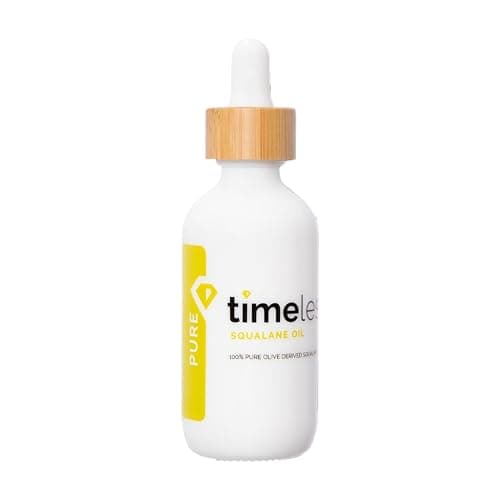
Timeless Skin Care 100% Pure Squalane
9.0A double-size, fragrance-free 100% squalane that usually lands at the lowest cost per ounce of any pick here.
Read our review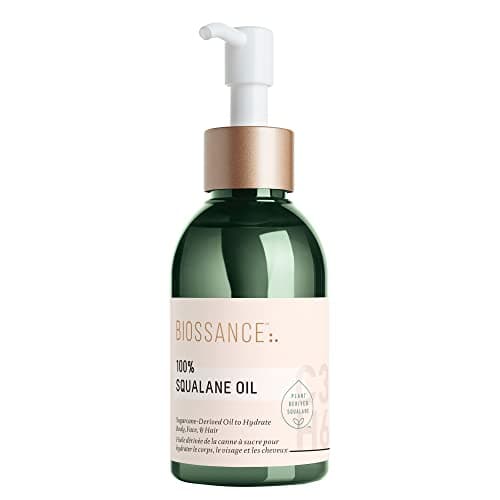
Biossance 100% Squalane Oil
8.8A sustainably sourced, sugarcane-derived squalane in a larger bottle — the polished pick if you want brand pedigree and a bigger size.
Read our reviewIf the bottle you are really weighing is The Ordinary rather than either of these, both of those matchups are already written: The Ordinary vs Timeless and The Ordinary vs Biossance. If you would rather see all four single-ingredient oils ranked at once, with cost per ounce computed from the live price and the listed size, that is best squalane oil. And for the broader question of what a bottle of squalane should cost before you judge any of these, squalane oil price sets the brackets.
If you have already decided against the premium bottle and simply want the cheapest honest replacement for it, Biossance squalane oil alternatives ranks four of them - and makes the point this head-to-head also makes, that the big bottle's cost per ounce is far closer to the budget oils than its sticker suggests.
Sources
Frequently asked questions
Is Biossance or Timeless squalane better?
Neither is better on your skin. Both are 100% squalane with one ingredient on the label, so there is no formulation difference to feel. Timeless has been cheaper per ounce at every price check we have run. Biossance has the larger bottle and names sugarcane as its plant source. Pick on whichever of those three things you care about.
Why is the bigger Biossance bottle more expensive per ounce?
Because the premium is in the price, not the size. Biossance sits in a premium price bracket and Timeless in a mid one, and that gap is wider than the gap between a 3.3 fl oz bottle and a 2 fl oz one. It is the one place on this site where buying the bigger bottle does not get you the cheaper oil, so check the per-ounce figure instead of assuming it.
Are Biossance and Timeless squalane the same thing?
In the bottle, effectively yes. Both are 100% squalane, fully saturated, fragrance-free and single-ingredient, so the oil touching your skin is the same molecule at the same purity. The differences are bottle size, whether the plant source is disclosed, the brand, and the price per ounce.
Is Biossance squalane worth the extra money?
It is worth it for the bottle size and the named sugarcane source, and it is not worth it for the oil, because the oil is identical. If you use squalane heavily - hair, body, a massage tool - a big bottle has real value even at a worse per-ounce rate. If you use two drops on your face at night, you are paying a premium for oil you will not get through.
Which squalane is better for sensitive skin?
They are equivalent. Both have one ingredient and no fragrance, which is the whole specification for reactive skin, and there is nothing else on either label that can sting. Choose on size and price instead. Our sensitive-skin buying guide ranks the wider catalog on how few things on the label can irritate.
Is Timeless squalane plant-derived?
The brand states plant-based and does not name which plant. That is a disclosure gap rather than a reason for suspicion - essentially all cosmetic squalane sold in the US today is plant-derived, and shark-derived squalane has largely left the mainstream market. Biossance names sugarcane, which is why it ranks higher on our plant-derived page.
Does a 3.3 fl oz bottle of squalane go bad before you finish it?
Unlikely. Squalane is hydrogenated and has no double bonds for oxygen to attack, which is why it is used in place of the skin's own squalene in the first place. Kept capped and out of direct sunlight it comfortably outlasts a face routine. The more realistic cost of an oversized bottle is money spent on oil you never use.
Which one should I buy if I use squalane on my hair and body too?
That is the case for Biossance. Hair and below-the-neck use goes through several times what a facial routine does, and the 3.3 fl oz bottle is the largest pure squalane we cover, so you are not rationing it. If cost per ounce still matters more to you than refill frequency, two bottles of Timeless remain the cheaper route to the same volume.
Keep reading
See every squalane oil ranked on cost per ounce
All four single-ingredient oils in one table, with the price pulled live and the cost per ounce computed from the listed size — so the bigger bottle has to earn it.
See the best squalane oils