Squalane and Niacinamide: Can You Use Them Together?
Yes, and they are a genuinely good pair — a water-based active underneath, an emollient seal on top. The order is what people get wrong.
We may earn a commission if you buy through our links, at no extra cost to you. Prices are pulled live from Amazon and can change. How this works.
Yes, and the order is niacinamide first, squalane second. Niacinamide is a water-soluble active that needs to get into skin to do anything; squalane is an emollient that sits on the surface and slows water escaping. So the active goes on first, onto skin that is still slightly damp, and the squalane goes over the top once it has absorbed. There is no chemical conflict between them, no pH to destabilise, and no need to alternate nights. If you want one product instead of two, the Biossance Squalane + 5% Niacinamide Brightening Eye Serum puts squalane third of twenty-two ingredients directly behind the niacinamide — but it is an eye serum at a high cost per ounce, and for a whole face two products is cheaper.
This is the pairing we get asked about most after hyaluronic acid, and the reason is that niacinamide is now in almost everything. It turns up in serums, in moisturisers, in body lotions, in sunscreens, and in a great many products that do not put it on the front of the bottle. So most people reading this already own some, whether or not they went looking for it — which makes the real question not whether to combine them but where each one goes.
What each one actually does
Niacinamide is vitamin B3, and it is one of the few genuinely multi-purpose actives with a decent evidence base behind it. Dermatology references credit it with supporting the skin barrier, helping to regulate oil production, reducing the look of enlarged pores over time, and improving uneven tone and post-inflammatory marks. It is water-soluble, it is well tolerated at the 4–5% concentrations most serums use, and it does not photosensitise skin, so it can be used morning or night.
Squalane is not an active at all. It is a saturated hydrocarbon — the hydrogenated form of squalene, a lipid your own sebum contains — and it works mechanically rather than biochemically: it softens the surface, fills the microscopic gaps between cells so the surface reflects light more evenly, and slows trans-epidermal water loss. It has no pH, no concentration-dependent potency and no target in the skin. Which is exactly why it layers well with everything, including niacinamide.
The order, step by step
- Cleanse and pat your face most of the way dry. Leave it slightly damp.
- Niacinamide serum, a few drops, pressed in. Give it a minute to absorb — long enough that your skin no longer feels wet to the touch.
- Squalane, two to three drops, pressed rather than rubbed. It will disappear in about a minute.
- Moisturiser on top if you want more cushion, or skip it — squalane is doing the sealing job.
- Sunscreen last in the morning, never mixed with anything underneath it.
The one mistake that wastes your serum: putting the oil on first. Squalane is not an impenetrable film, but a layer of lipid between a water-soluble active and your skin is a hurdle the active did not need. Thin to thick, water before oil.
Can you mix them in your hand?
You can, and it is a reasonable shortcut when you are in a hurry, but it is a slight downgrade rather than a neutral one. Mixing a water-based serum with an oil in your palm gives you a temporary, unstable emulsion — the two will separate, the dose of each is now a guess, and the oil is around the active from the moment it touches your face rather than after it. If you are going to mix anything, mix squalane into a cream rather than into an active, which is covered in how to layer squalane.
The myths worth clearing up
"Niacinamide and vitamin C cancel each other out." This comes from decades-old work on raw ingredients at high heat, and it does not describe modern finished formulas. Dermatology sources are comfortable with the combination; if you want the detail on layering either with squalane, see squalane and vitamin c. "Niacinamide causes flushing." That is niacin (nicotinic acid), a different molecule, taken orally. Topical niacinamide does not produce a niacin flush. "Squalane blocks niacinamide." No — but applied first it slows it down for no benefit, which is why the order above exists. "Higher percentages are better." Above about 5% the main thing that reliably increases is the chance of irritation.
What to look for when you are buying
- For the squalane half: one ingredient. A bottle whose INCI list reads *Squalane* and stops is the cheapest and most predictable way to add the sealing step, with nothing in it to react to.
- For the niacinamide half: 4–5% is the sensible range, and the ingredient should be high enough on the list to be present in a meaningful amount.
- Fragrance-free on both, if your skin is at all reactive — added fragrance is the most common cause of cosmetic allergic contact dermatitis, and it is the likeliest culprit if a two-product routine starts stinging.
- Check what you already own. Niacinamide is in a great many moisturisers and body lotions. If yours has it, you may not need a separate serum at all — just the squalane over the top.
- One product or two? A combined squalane-plus-niacinamide formula is convenient and locks you into one ratio. Two products cost less per use and let you change either half.
What to buy for this pairing
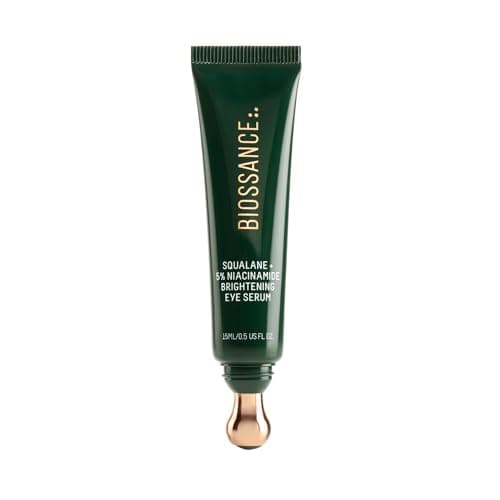
Biossance Squalane + 5% Niacinamide Brightening Eye Serum
7.5The one pick here with actives aimed squarely at dark circles — niacinamide, caffeine and stable vitamin C — but part of the brightening you see is optical, and the label does not spell that out.
Read our review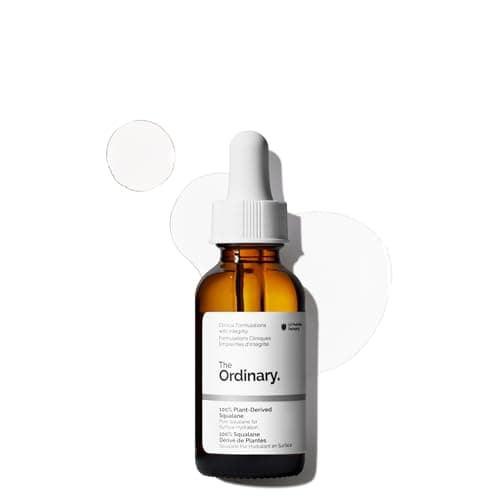
The Ordinary 100% Plant-Derived Squalane
9.2A single-ingredient, plant-derived squalane in a full 30 ml bottle at a low price, stocked almost everywhere — the default pick for most people.
Read our review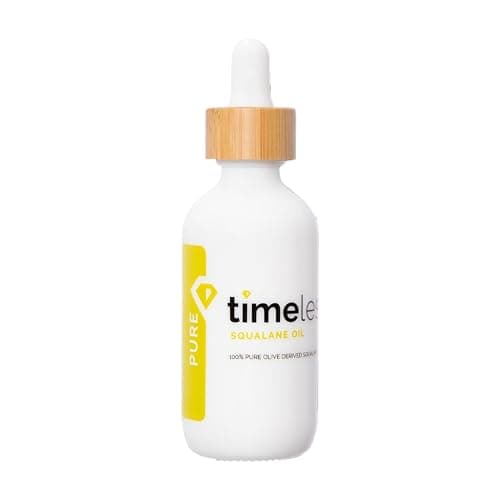
Timeless Skin Care 100% Pure Squalane
9.0A double-size, fragrance-free 100% squalane that usually lands at the lowest cost per ounce of any pick here.
Read our reviewWho this pairing suits best
Oily and combination skin gets the most out of it, because niacinamide's oil-regulating reputation plus squalane's unusually low comedogenic rating gives you a hydrating routine that does not feel heavy — see squalane for oily skin. Dehydrated skin that is also oily is the classic case: the active treats the oil, the emollient treats the water loss, and neither makes the other worse. It is also a sensible pair for anyone whose skin is reacting to a retinoid, where niacinamide supports the barrier and squalane buffers the dryness — squalane and retinol covers that specifically.
If you have never used either, add one at a time, a week apart. That is not caution for its own sake: when two new products go on the same night and something stings, you have no way of knowing which to stop. Our guide to whether you can be allergic to squalane covers how to narrow it down if that happens.
Sources
Frequently asked questions
Can you use squalane and niacinamide together?
Yes, and they complement each other. Niacinamide is a water-soluble active that needs to get into skin; squalane is a surface emollient that slows water loss. Apply the niacinamide first on slightly damp skin, let it absorb for about a minute, then press two or three drops of squalane over the top.
Which goes on first, squalane or niacinamide?
Niacinamide. Thin to thick, water before oil — the water-based active goes on first so nothing is between it and your skin, and the squalane goes over it as the sealing layer. Putting the oil on first does not block the niacinamide outright, but it slows it down for no benefit.
Can I mix squalane and niacinamide in my hand?
You can, but it is slightly worse than layering. Mixing a water-based serum with an oil gives you an unstable emulsion that will separate, makes the dose of each a guess, and puts the oil around the active from the start. If you are short of time it is fine; if you want the serum to work as intended, layer them.
Does niacinamide cause flushing?
Topical niacinamide does not. The flush people have heard about comes from niacin (nicotinic acid), a different molecule, taken as an oral supplement. Topical niacinamide at the usual 4–5% is well tolerated; if a niacinamide product makes you red, the likelier causes are the concentration being unusually high or something else on the ingredient list.
Is there a product with both squalane and niacinamide?
Yes — the Biossance Squalane + 5% Niacinamide Brightening Eye Serum puts squalane third of twenty-two ingredients, directly behind the niacinamide, with caffeine and a stable vitamin C behind it. It is an eye serum, so it is a high cost per ounce for a 15 ml bottle, and part of the immediate brightening comes from light-reflecting minerals rather than from the actives. For a whole face, two separate products cost far less.
Can I use niacinamide and squalane every day?
Yes, morning and night if you like. Niacinamide does not photosensitise skin and does not need a rest day at normal strengths, and squalane is an inert emollient with no exposure limit. The only reason to use less is preference — some people find any oil too much in the morning under makeup or sunscreen.
Will this pairing help with large pores or uneven tone?
Niacinamide has reasonable evidence for the appearance of enlarged pores and for uneven tone over a timescale of weeks to months. Squalane contributes nothing to either directly; what it does is make the surface smoother so it scatters light more evenly, which looks like an improvement and genuinely is one, but comes off with your cleanser. Do not expect squalane to change pigment — it has no effect on it.
Keep reading
Pick the squalane half
Our ranked squalane oil picks, each with a live price and cost per ounce — the single-ingredient bottles are the cheapest way to add the sealing step.
See the best squalane oils