The Best Squalane for Combination Skin
Oily T-zone, dry cheeks, one bathroom shelf. Ranked on dose control rather than formula weight — because combination skin does not need a compromise product, it needs a product you can place.

We may earn a commission if you buy through our links, at no extra cost to you. Prices are pulled live from Amazon and can change. How this works.
The pick is The Ordinary 100% Plant-Derived Squalane, and the reason is the glass dropper rather than anything in the formula. Combination skin is the one case where the useful question is not how rich a product is but how precisely you can apply it: two drops pressed into dry cheeks and jaw, nothing on the nose and forehead, every night. A dropper lets you do that. A pump does not. The budget pick is the Good Molecules Squalane Oil — the same single ingredient, the cheapest squalane we cover at checkout, in a 13 ml bottle that suits a face using two drops a night and nothing on half of it.
The honest starting point is that combination skin does not want a special product. It wants an ordinary one used selectively. Squalane is well suited to that because it is the same molecule whether your skin is oily or dry: a lightweight emollient, commonly rated 0 to 1 for comedogenicity, that absorbs in about a minute and leaves no film. It will not make an oily T-zone oilier, because the oil your T-zone makes is sebum and squalane is not sebum — it is a stable, saturated relative of it with the parts that go rancid removed. And on dry cheeks it does what any good emollient does and holds water in. One bottle, two jobs, applied to different square inches of the same face.
What combination skin should actually avoid is the thing most routines built for it get wrong: stripping the oily half to fix the shine, then having to repair the dry half afterwards. A harsh foaming wash takes the T-zone down to squeaky, the skin answers by producing more oil, and the cheeks pay for it in flaking. That is why a cleanser is on this page at all, and why the one we pick is a fragrance-free foaming oil rather than a conventional gel wash. Published dermatology guidance on face washing says the same thing in plainer terms: lukewarm water, a gentle non-abrasive cleanser, no scrubbing, and do not wash more often than twice a day.
How we picked: we don't run a lab and we don't claim to. We read every ingredient list, compiled the published specs, and computed the cost per ounce below. See our full method.
Quick picks
Our ranked shortlist. Tap a row for the full review, or the price to buy.
| # | Product | Best for | Score | Price |
|---|---|---|---|---|
| 1 | 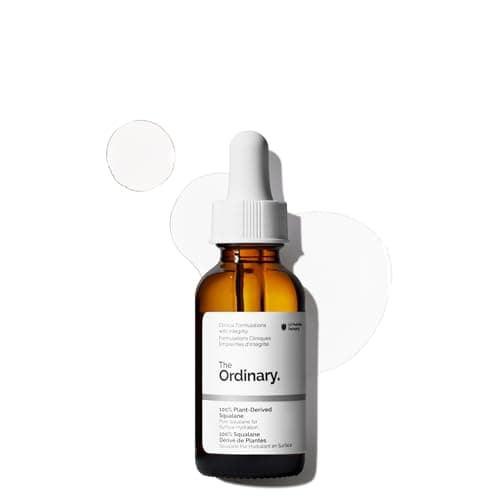 The Ordinary 100% Plant-Derived Squalane A single-ingredient, plant-derived squalane in a full 30 ml bottle at a low price, stocked almost everywhere — the default pick for most people. | Best overall value | 9.2 | |
| 2 | 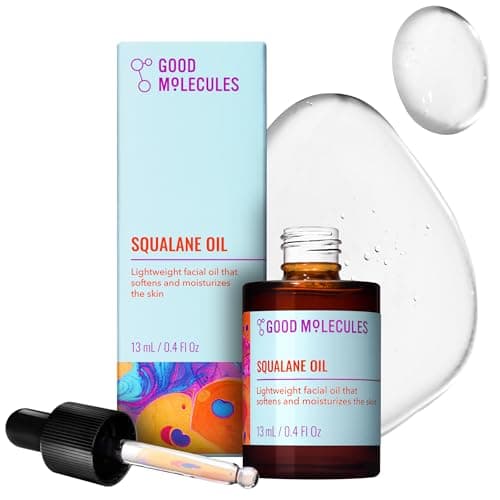 Good Molecules Squalane Oil The lowest sticker price of any 100% squalane here — but in a 13 ml bottle, so it's the cheapest way to try the ingredient, not the cheapest way to keep using it. | Best budget pick | 8.9 | |
| 3 | 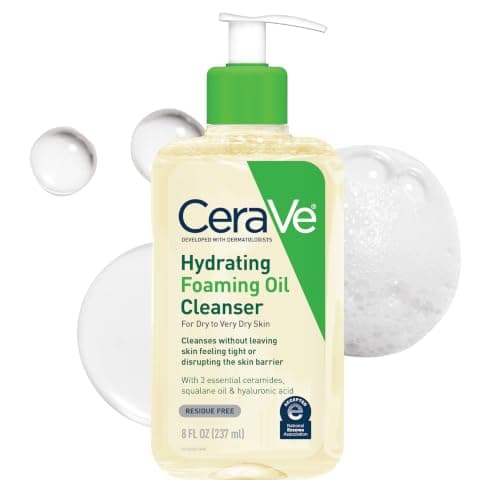 CeraVe Hydrating Foaming Oil Cleanser A drugstore foaming oil that pairs squalane with CeraVe's ceramides — the accessible, barrier-friendly foaming choice. | Best foaming option | 8.2 | |
| 4 | 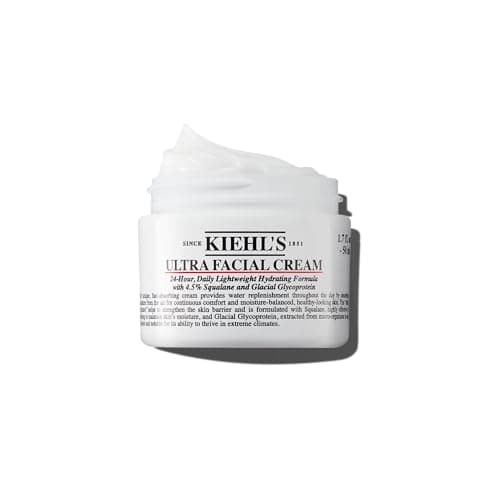 Kiehl's Ultra Facial Cream The famous one, and on the ingredient list it mostly earns it — squalane 4th of 35 at a declared 4.5%, no fragrance on the list, and a National Eczema Association Seal. The glacier and ceramide stories on the jar sit below the preservative. | A light everyday cream with squalane high on the list | 7.7 |
The Ordinary 100% Plant-Derived Squalane
9.2A single-ingredient, plant-derived squalane in a full 30 ml bottle at a low price, stocked almost everywhere — the default pick for most people.
- Purity
- 100% squalane
- Source
- Plant-derived (sugarcane)
- Size
- 1 fl oz (30 ml)
- Cost / oz
- $10.40/oz
- Best for
- Best overall value
What we like
- 100% squalane, no fillers or fragrance
- One of the lowest entry prices of any name-brand squalane
- Sugarcane-derived and vegan
- Widely stocked, easy to repurchase
Keep in mind
- Small 30 ml bottle
- Simple dropper rather than an airless pump
Skip it only if you want a large-format bottle or airless packaging for oxidative stability.
Price as of November 21, 2026. Prices set by Amazon and change.
#ad · How we make money
Good Molecules Squalane Oil
8.9The lowest sticker price of any 100% squalane here — but in a 13 ml bottle, so it's the cheapest way to try the ingredient, not the cheapest way to keep using it.
- Purity
- 100% squalane
- Source
- Plant-derived (100% natural squalane)
- Size
- 0.44 fl oz (13 ml)
- Cost / oz
- $12.73/oz
- Best for
- Best budget pick
What we like
- Lowest sticker price on the list
- 100% squalane, non-greasy
- Good for testing whether squalane suits you before spending more
Keep in mind
- A 13 ml bottle — less than half the size of a standard 30 ml oil, so the cost per ounce is high
- Sold through fewer retailers
Skip it if you already know you like squalane — the larger bottles cost far less per ounce for the same molecule.
$8.0030% off
Price as of November 21, 2026. Prices set by Amazon and change.
#ad · How we make money
CeraVe Hydrating Foaming Oil Cleanser
8.2A drugstore foaming oil that pairs squalane with CeraVe's ceramides — the accessible, barrier-friendly foaming choice.
- Purity
- Squalane-containing foaming oil cleanser
- Source
- Squalane + ceramides in a foaming oil
- Size
- 8 fl oz (236 ml)
- Cost / oz
- $1.37/oz
- Best for
- Best foaming option
What we like
- Squalane plus three essential ceramides
- Foams yet stays hydrating, not squeaky
- Large 8 oz bottle, very low cost per use
Keep in mind
- Squalane is 9th of 33, behind the surfactant system, not the headline
- Too light for heavy makeup on its own; reviewers use it as a second cleanse
Skip it if you want a squalane-first (rather than surfactant-first) cleanser, or a one-step remover for a full face of makeup.
$15.9931% off
Price as of November 21, 2026. Prices set by Amazon and change.
#ad · How we make money
Kiehl's Ultra Facial Cream
7.7The famous one, and on the ingredient list it mostly earns it — squalane 4th of 35 at a declared 4.5%, no fragrance on the list, and a National Eczema Association Seal. The glacier and ceramide stories on the jar sit below the preservative.
- Purity
- Squalane 4th of 35 — declared 4.5%
- Source
- Plant-derived (Kiehl's names olives and sugarcane)
- Size
- 1.7 fl oz (50 ml)
- Cost / oz
- $16.06/oz
- Best for
- A light everyday cream with squalane high on the list
What we like
- Squalane 4th of 35 at a declared 4.5% — the highest position in any face cream we cover
- States its squalane percentage outright, so you don't have to infer it from list position
- No fragrance, parfum or essential oil on the published list; National Eczema Association Seal of Acceptance
- Sold by Kiehl's own Amazon storefront, which also lists a larger size that costs less per ounce
Keep in mind
- Dimethicone sits 3rd, so there is at least as much silicone as squalane in the jar
- The glacial glycoprotein and pro-ceramide on the label sit 29th and 31st, after the preservative
- Myristyl myristate plus seven plant oils make it a patch-test product for acne-prone skin
- SkinSAFE rates it 91 and withholds its fragrance-free badge without naming the ingredient it flagged
- The 72-hour hydration and 1-hour barrier claims come from the brand's own instrumental studies
Skip it if your skin breaks out easily, if you want a genuinely ceramide-rich barrier cream, or if you only want squalane — a 100% squalane oil gives you far more of it per dollar.
$39.0030% off
Price as of November 21, 2026. Prices set by Amazon and change.
#ad · How we make money
Cost per ounce, compared
Computed from the current Amazon price and the listed size. Prices as of November 21, 2026 and set by Amazon.
How to use any of these on combination skin, in one paragraph. Cleanse with lukewarm water, pat rather than rub, and leave your face slightly damp. Put two drops of squalane on your fingertips, warm them, and press — do not rub — into the areas that are dry: usually cheeks, jawline and the skin around the mouth. Skip the nose, the chin and the centre of the forehead entirely on the first few nights, then add a single drop there if those areas feel tight by morning. In the daytime, squalane goes under sunscreen, not over it. If your cheeks need more than squalane in winter, the right move is a light cream on the cheeks only, which is the role the Kiehl's pick plays here.
On the rest of the order: the Good Molecules Squalane Oil is second as the budget pick, and the 13 ml bottle is a genuine advantage rather than a compromise for a face that uses two drops a night — it is the most expensive per ounce on this page and still the cheapest thing on it to buy. The CeraVe Hydrating Foaming Oil Cleanser is third and is the cleanse step we would pair with either: a fragrance-free foaming oil with squalane, three ceramides and hyaluronic acid, the cheapest per ounce on this page, and the pick precisely because it cleans an oily T-zone without leaving dry cheeks tight. The Kiehl's Ultra Facial Cream is fourth and is for people who want a cream rather than an oil — squalane is fourth of thirty-five at a declared 4.5%, with no fragrance on the published list, and it is light enough to use on the cheeks without being a problem if it strays. Note that cost per ounce in the table below is only comparable within a format: an 8 fl oz cleanser and a 13 ml oil are not competing for the same money.
Frequently asked questions
Is squalane good for combination skin?
Yes, and it is one of the better options precisely because it is unremarkable. Squalane is a lightweight emollient rated 0 to 1 for comedogenicity that absorbs quickly and leaves no film, so it suits dry cheeks without making an oily T-zone worse. The trick with combination skin is applying it zonally rather than all over.
What is the best squalane for combination skin?
The Ordinary 100% Plant-Derived Squalane, judged on dose control — a 30 ml glass dropper lets you put two drops exactly where the dryness is and nothing where it is not. The Good Molecules Squalane Oil is the budget pick and the better choice if you will only ever use a drop or two a night, and the Kiehl's Ultra Facial Cream is the option for anyone who would rather use a cream.
Should I put squalane on my whole face if I have combination skin?
Start by not doing that. Apply it to the dry areas only for the first week — cheeks, jawline, around the mouth — and leave the nose, chin and central forehead bare. If those areas feel tight in the morning, add one drop there. Plenty of people with combination skin end up using squalane all over; the point is to find that out by adding rather than by backing off.
Will squalane oil make an oily T-zone worse?
It should not. The oil your T-zone produces is sebum, and squalane is a stable, fully saturated version of one of its components, so it does not add to the pathway that makes skin greasy. It is also rated 0 to 1 on the comedogenic scale. If your T-zone looks shinier after using it, the likely cause is dose rather than the ingredient — try half as much, applied to damp skin.
Do I need a different moisturizer for each zone of my face?
Usually not two moisturizers, but often two doses. The common pattern that works is one light product everywhere and a second, richer layer on the dry areas only. Squalane fits either role — on its own as the light layer, or pressed over a cream on the cheeks to seal it in.
What kind of cleanser is right for combination skin?
A gentle, fragrance-free one that does not leave any part of your face squeaky. The failure mode with combination skin is choosing a cleanser aggressive enough for the T-zone and then needing to repair the cheeks afterwards. A foaming oil cleanser, like the CeraVe pick here, is a reasonable middle ground: it clears oil and sunscreen but leaves the barrier ingredients behind.
Is squalane or hyaluronic acid better for combination skin?
They do opposite jobs and work best together. Hyaluronic acid is a humectant that pulls water into the upper layers; squalane is an emollient that keeps it there. On combination skin the usual order is the water-based product first while skin is damp, then squalane on the dry zones to seal it. We compare the two in detail on our squalane vs hyaluronic acid page.
Sources
Keep reading
Shinier than you'd like?
The oily-skin guide ranks the same oils on dose size — which drop count you actually use, and the bottle that makes it cheapest.
See the best squalane oil for oily skin