The Ordinary Squalane Cleanser vs CeraVe Hydrating Foaming Oil Cleanser
Both get called a squalane cleanser. One is built on squalane; the other is a foaming wash with squalane in it. That difference decides which you should buy.
We may earn a commission if you buy through our links, at no extra cost to you. Prices are pulled live from Amazon and can change. How this works.
Short version: these are two different kinds of product that happen to share an ingredient. The Ordinary Squalane Cleanser is a squalane-first balm: squalane is the first of 18 ingredients, ahead of water, and there is no foaming surfactant system in it. CeraVe Hydrating Foaming Oil Cleanser is a water-based foaming wash: water and glycerin lead, six surfactants and emulsifiers follow, and squalane is 9th of 33. Both are fragrance-free on their published lists, both carry the National Eczema Association's Seal of Acceptance, and both are sold by Amazon.com and in stock as we write this.
So the choice is not about which brand is better. It is about whether you want a balm you massage onto dry skin to melt off sunscreen and makeup (The Ordinary), or a pump-and-rinse foam that is cheap, quick and barrier-friendly but only lightly squalane (CeraVe). Below is what each ingredient list actually says, what people who have used both report, and a buyer-first verdict for each skin type.
What each one actually is, from the ingredient list
The Ordinary Squalane Cleanser: a squalane balm with no foaming surfactant
The Ordinary's US list runs 18 ingredients: squalane, water, coco-caprylate/caprate, glycerin, sucrose stearate, ethyl macadamiate, caprylic/capric triglyceride, hydrogenated starch hydrolysate, sucrose laurate, polyacrylate crosspolymer-6, isoceteth-20, sodium polyacrylate, tocopherol, hydroxymethoxyphenyl decanone, trisodium ethylenediamine disuccinate, malic acid, ethylhexylglycerin, chlorphenesin. Squalane is first, which is rare even among products that put the word on the front, and there is no coco-betaine, no glutamate, no isethionate; nothing built to foam. The cleaning is done by squalane and two lightweight esters (coco-caprylate/caprate and ethyl macadamiate) dissolving oil-based grime, and by the sucrose esters (with isoceteth-20) holding that dissolved grime in an emulsion so water can rinse it away. The brand calls it soap-free and non-comedogenic and lists a pH of 5.5 to 6.5.
One label oddity worth clearing up, because the autocomplete question "is The Ordinary Squalane Cleanser oil-based or water-based" comes up a lot: the brand's Amazon listing calls it oil-free. That is true in the narrow sense that there is no plant oil in it; the fatty part of the formula is squalane (a hydrocarbon, not a triglyceride oil) plus esters. In practice it behaves exactly like an oil cleanser: you apply it to dry skin, it turns oil-like as it warms, and it lifts sunscreen the way an oil does. If you have been told to avoid "oil cleansers," this is one in function if not in name.
CeraVe Hydrating Foaming Oil Cleanser: a foaming wash with squalane 9th
CeraVe's US list runs 33 ingredients, and the order tells the story: water, glycerin, PEG-200 hydrogenated glyceryl palmate, coco-betaine, disodium cocoyl glutamate, PEG-120 methyl glucose dioleate, polysorbate 20, PEG-7 glyceryl cocoate, and only then squalane, followed by ceramide NP, ceramide AP and ceramide EOP. Sodium hyaluronate is 20th, cholesterol 21st, phytosphingosine 28th. Caprylic/capric triglyceride, the "triglyceride" on the front of the bottle, is 26th. There is more glycerin than squalane and more surfactant than squalane.
That is not a criticism of the product; it is a description of the category. This is a mild, glutamate-and-betaine foaming cleanser with a little emollient and CeraVe's usual ceramide trio added so that it rinses without the tight feeling a stronger foam leaves. The word "oil" in the name describes how it looks in the hand (a clear liquid) and the brand's "oil dissolves oil" framing, not the formula's backbone, which is water and surfactant. Squalane is genuinely there, doing its emollient job, but it is a supporting ingredient. Our is squalane comedogenic? explainer covers why that emollient is a sensible one to have in a cleanser at all.
The one-line difference: The Ordinary is squalane that cleanses; CeraVe is a cleanser with squalane. If squalane is the reason you searched, that settles most of it.
Fragrance: the claim we had wrong, corrected
Until this page was written, we described the CeraVe foaming oil as containing fragrance. Re-reading the current list from CeraVe's own site, there is no fragrance or parfum on it, the brand explicitly labels the product fragrance-free, and the National Eczema Association directory entry carries the same list. We were wrong, and we have corrected it across the site. The Ordinary's list carries no fragrance either. On this axis the two products are level, and both are reasonable choices for skin that reacts to scent; see squalane for sensitive skin for how we think about fragrance generally.
One nuance so nobody is surprised later: the SkinSAFE database gives the CeraVe cleanser a score of 91 but withholds its "Fragrance Free" badge and lists "Fragrance" under "product contains" without naming an ingredient. SkinSAFE defines that category as "fragrances and allergy causing botanicals," so this is a classification call on their side rather than evidence of a hidden perfume. If you are patch-test cautious, that is worth knowing; if you simply do not want a scented product, neither of these is scented.
Makeup and sunscreen removal
We do not test products (see how we choose), so here is what people who have used them say. On The Ordinary, Giorgia Guazzarotti at Beautiful With Brains (review updated December 2022) writes: "At first touch, it feels like a thick balm. Doesn't matter how much water you use, the texture never relaxes," and "it doesn't spread that well on the skin." But on the job it is there to do: "It effortlessly removes all traces of impurities and makeup, including waterproof makeup," with the caveat that "you need to work at it," and it leaves skin "both clean and soft" without a greasy residue. Her audience for it: people "who want a cleanser that takes everything off and are not too fussy about the texture."
On the CeraVe, Isabella Muse at Musings of a Muse (July 2023) describes "a lightweight gel-like consistency that resembles any foaming facial wash you have" that produces "very, very, very little lather." Her verdict on makeup: "It definitely will not remove hardcore makeup in my opinion," but "it's the perfect companion in a double cleanse," and afterward "it just doesn't make me tight or dry after using it. Very non-stripping." She rated it three out of five, praising the feel and marking it down for not managing a full face of makeup alone.
Put those together and the pattern is clear. The Ordinary is the first cleanse: the one you use on dry skin to melt off sunscreen, foundation and mascara, at the cost of a stiff texture that needs a minute of massage and, ideally, a warm damp cloth to finish. CeraVe is the everyday or second cleanse: quick, foamy, gentle, and not enough on its own for heavy makeup. The Ordinary's own directions agree; the brand says the balm works as a stand-alone cleanser or as the first step of a double cleanse.
Do you need both? What a dermatologist says about double cleansing
The obvious routine is The Ordinary first, CeraVe second, and it is a good one on nights you have worn sunscreen and makeup. It is not a routine most people need every day. Dermatologist Jane Wu, MD, writing for Cleveland Clinic, describes double cleansing as "cleansing your face twice, first with an oil-based product and then followed by a water-based cleanser," says the oil step helps people wearing makeup and waterproof products, and then adds the part the skincare industry tends to leave out: "Double cleansing is usually not necessary. For most people, washing your face once thoroughly with a gentle cleanser is more than adequate," and "dermatologists worry more about over washing than incorporating a double cleansing routine."
The American Academy of Dermatology's face-washing guidance points the same way: a gentle, non-abrasive cleanser without alcohol, lukewarm water, applied with fingertips rather than a washcloth or sponge, no scrubbing, and washing limited to twice a day and after sweating. Both of these cleansers clear that bar. So the honest advice is: pick one as your daily cleanser, and only add the other if your evenings genuinely involve sunscreen plus makeup that a single wash is not shifting. Our how to use squalane oil guide covers where a cleanser sits in the rest of a squalane routine.
How to use each one properly
Most disappointment with a balm cleanser comes from using it like a foam. The Ordinary's directions are specific: start with dry skin and dry hands, dispense the balm, rub your palms together until it warms into an oil-like consistency, massage it over the face, then rinse with warm water. Adding water too early is what stops it melting; the balm needs contact with sunscreen and makeup before it meets water. The brand notes it also works as the first step of a double cleanse, and, in a pinch, as a shaving balm on wet skin.
CeraVe's directions are the opposite: wet the skin with warm water first, massage the cleanser in and let it turn from a clear liquid into a light foam, then rinse well and pat dry. It is designed for the face and body, so it can double as a gentle body wash, which is part of the value case for the larger bottle. Neither brand suggests leaving its product on the skin; both are rinse-off cleansers, and the AAD's advice on lukewarm water and no scrubbing applies to both.
Whichever you use, follow with the rest of the routine on damp skin: a squalane oil or a moisturizer that contains it. Our squalane in your skincare routine guide lays out the order, and if you are choosing the next product, squalane oil vs moisturizer explains which format suits which skin.
Skin type by skin type
- Dry or dehydrated skin: The Ordinary. A squalane-first balm with no foaming surfactant is the gentlest way to remove a day's sunscreen, and it leaves an emollient finish rather than a clean-slate one. If you strongly prefer foam, CeraVe is the least stripping foam we cover, thanks to the glutamate surfactants and the ceramides. More in squalane for dry skin.
- Sensitive or eczema-prone skin: either, and both carry the NEA Seal. The Ordinary has the shorter list (18 vs 33) and no PEG surfactants; CeraVe is the one the brand positions for eczema-prone skin and even body use. Patch-test whichever you choose.
- Oily or combination skin: CeraVe, most days. A foaming wash on wet skin is quicker and leaves less behind, and squalane at 9th is enough to keep it from feeling tight. Keep The Ordinary for evenings with sunscreen or makeup. See squalane for oily skin for why squalane itself is not the problem here.
- Acne-prone skin: both are labeled non-comedogenic by their brands. Dr. Wu's caution is that oil-based cleansers used alone can trigger breakouts in some acne-prone people, so if that is you, CeraVe as the daily wash and The Ordinary only as a first cleanse (rinsed thoroughly) is the lower-risk order. Our squalane for acne-prone skin page has the fuller picture.
- Makeup or mineral sunscreen every day: The Ordinary as the first cleanse. It is the one reviewers describe removing waterproof makeup; CeraVe is the one they describe as not managing heavy makeup alone.
- Someone who wants one bottle, no ritual: CeraVe. Pump, foam, rinse, done, and the bottle is large.
Price, size and cost per use
CeraVe's bottle is larger (8 fl oz against 5.1) and has carried the lower sticker price at every check we have run, so on cost per ounce it is not a close contest; the live prices are in the picks block below, and cost per ounce for each is computed on our best squalane cleanser roundup and on each review page. Cost per use narrows the gap a little: CeraVe's directions call for a pea-sized amount, and The Ordinary's balm is dispensed a small amount at a time and warmed in the hands, so both bottles last a long time. The Ordinary also sells a 50 ml size (and a travel size on Amazon) if you want to try the texture before committing to the 150 ml tube; CeraVe sells a 16 oz size that is the better buy if you already know you like it and plan to use it on the body too.
Live prices for both are below. We do not repeat dollar figures in prose because they change; the cards do not.
Compare the two
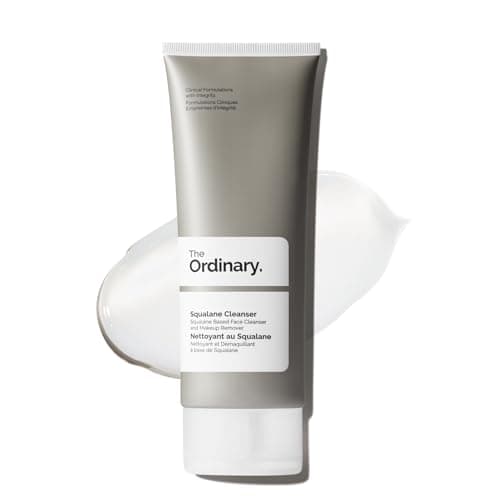
The Ordinary Squalane Cleanser
8.9A squalane-based melting balm cleanser that dissolves makeup and sunscreen without stripping the barrier — the standout squalane cleanser.
Read our review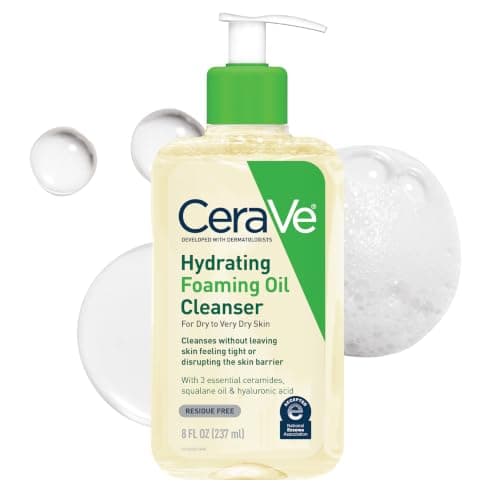
CeraVe Hydrating Foaming Oil Cleanser
8.2A drugstore foaming oil that pairs squalane with CeraVe's ceramides — the accessible, barrier-friendly foaming choice.
Read our reviewHonest cons of each
The Ordinary Squalane Cleanser
- The texture is stiff and does not spread easily; the Beautiful With Brains review says it "never relaxes" no matter how much water you add, and that you "need to work at it." A warm damp cloth to finish makes a real difference.
- It is a balm, not a foam. If a wash does not feel clean to you unless it lathers, this will not feel clean to you.
- The main Amazon listing is the 150 ml tube only, and its sticker price is higher than CeraVe's for a smaller tube.
- The "oil-free" label is technically true and practically confusing; it functions as an oil cleanser.
CeraVe Hydrating Foaming Oil Cleanser
- Squalane is 9th of 33, behind six surfactants and emulsifiers. If you searched for a squalane cleanser expecting squalane to be the point, this is not that.
- Reviewers describe very little lather and say it will not take off heavy makeup on its own. It is a gentle daily or second cleanse, not a remover.
- The surfactant system leans on PEG-based ingredients (PEG-200, PEG-120, PEG-7, PEG-150, PEG-6, PPG-5-ceteth-20). None of that is a safety concern in a rinse-off product, but people who avoid PEGs by preference should know.
- SkinSAFE withholds its fragrance-free badge (see above) even though no fragrance appears on the list; patch-test cautious buyers may want to note that.
The CeraVe confusion: Hydrating Facial Cleanser is a different product
A lot of "The Ordinary Squalane Cleanser vs CeraVe" searches actually mean the CeraVe Hydrating Facial Cleanser, the cream-textured one in the white bottle, or the Hydrating Cream-to-Foam Cleanser. We checked both lists on CeraVe's site while writing this: neither contains squalane at all. The Hydrating Facial Cleanser is a 24-ingredient cetearyl-alcohol cream with the three ceramides and hyaluronic acid; the Cream-to-Foam is a taurate/isethionate foaming wash. They are perfectly good gentle cleansers, but they are not squalane cleansers, and a comparison with The Ordinary's balm on squalane grounds is a comparison of something with nothing. The Hydrating Foaming Oil Cleanser, the clear one in the blue-and-white pump bottle, is the only CeraVe face cleanser with squalane on the list, which is why it is the one on this page and on our best squalane cleanser roundup.
Verdict
Buyer-first verdict: if you came here because you want squalane to do the cleansing, buy The Ordinary; it is the only one of the two where squalane leads the list, and it is the one reviewers trust with sunscreen and waterproof makeup. If you want a cheap, fragrance-free, ceramide-backed foam for everyday washing and do not mind that squalane is a supporting act, buy CeraVe and skip the balm. Buy both only if your evenings genuinely need a first cleanse and a second one; most do not.
Whichever you choose, what goes on afterward matters at least as much: a cleanser is on the skin for a minute, an oil or moisturizer for the rest of the night. Our best squalane oil roundup covers the next step, and the best squalane cleanser page has the two of these ranked with the accessories a balm cleanse actually needs.
Sources
- The Ordinary — Squalane Cleanser (US product page: ingredient list, directions, pH, NEA Seal)
- CeraVe — Hydrating Foaming Oil Cleanser (US product page: ingredient list, fragrance-free, non-comedogenic, directions)
- CeraVe Australia — Hydrating Foaming Oil Cleanser (directions: pea-sized amount; sizes)
- CeraVe — Hydrating Facial Cleanser (ingredient list checked for squalane)
- CeraVe — Hydrating Cream-to-Foam Cleanser (ingredient list checked for squalane)
- National Eczema Association — The Ordinary Squalane Cleanser (Seal of Acceptance directory)
- National Eczema Association — Hydrating Foaming Oil Cleanser (Seal of Acceptance directory)
- SkinSAFE — CeraVe Hydrating Foaming Oil Cleanser (score and allergen badges)
- Cleveland Clinic — Double Cleansing Method Explained: Should You Try It? (Jane Wu, MD)
- American Academy of Dermatology — Face Washing 101
- Beautiful With Brains — The Ordinary Squalane Cleanser Review (Giorgia Guazzarotti; hands-on impressions quoted)
- Musings of a Muse — CeraVe Hydrating Foaming Oil Cleanser Review (Isabella Muse; hands-on impressions quoted)
Frequently asked questions
Is The Ordinary Squalane Cleanser oil-based or water-based?
It is a squalane-based balm. Squalane is the first of 18 ingredients, water is second, and there is no foaming surfactant. The brand's Amazon listing calls it oil-free, which is true only in the sense that it contains no plant oil; it applies to dry skin and behaves like an oil cleanser, then emulsifies with water and rinses to a milk.
Does CeraVe Hydrating Foaming Oil Cleanser contain fragrance?
No. CeraVe's current published US ingredient list carries no fragrance or parfum, the brand labels the product fragrance-free, and the National Eczema Association directory lists the same ingredients. We previously said it contained fragrance; that was wrong and has been corrected across this site.
Which is better for removing makeup: The Ordinary Squalane Cleanser or CeraVe Foaming Oil Cleanser?
The Ordinary. Reviewers describe it removing waterproof makeup with some effort, while the CeraVe foaming oil is described as too light for heavy makeup on its own. CeraVe works well as the second step after a balm or on days without makeup.
Can I use The Ordinary Squalane Cleanser and CeraVe Foaming Oil Cleanser together?
Yes, as a double cleanse: The Ordinary on dry skin first to melt sunscreen and makeup, then CeraVe on wet skin to rinse the residue. Dermatologists at Cleveland Clinic note that most people do not need to double cleanse every day, so keep it for evenings that need it.
Which has more squalane?
The Ordinary. Squalane is its first ingredient of 18. In the CeraVe foaming oil, squalane is 9th of 33, behind water, glycerin and six surfactants and emulsifiers. Exact percentages are not published by either brand.
Is the CeraVe Hydrating Facial Cleanser the same as the Hydrating Foaming Oil Cleanser?
No. The Hydrating Facial Cleanser (the cream in the white bottle) and the Hydrating Cream-to-Foam Cleanser contain no squalane at all on CeraVe's published lists. The Hydrating Foaming Oil Cleanser is the only CeraVe face cleanser with squalane, and it is the one compared on this page.
Which is better for oily skin?
CeraVe for daily washing: a light foam on wet skin is quicker and leaves less behind, and the glutamate surfactants keep it from stripping. The Ordinary is still the better first cleanse on evenings with sunscreen or makeup, even on oily skin.
Are both safe for eczema-prone skin?
Both products are listed in the National Eczema Association's Seal of Acceptance directory, and CeraVe positions its foaming oil for eczema-prone skin and body use. The Seal is not a guarantee for any individual; patch-test, and ask a dermatologist if you have active eczema.
Keep reading
Cleanser sorted? Choose the oil that goes on after it
Our ranked squalane oil picks, each with a live price, cost per ounce, and who it suits.
See the best squalane oils